
YouTube and ad blockers are in an arms race, and in 2026 your browser choice decides who wins before you install anything. On Chrome, Google changed the rules so the best blockers can’t run at full power. On Firefox, they can. Here’s why that happened, what actually still works, and the honest setup for each browser.

Why YouTube keeps winning on Chrome
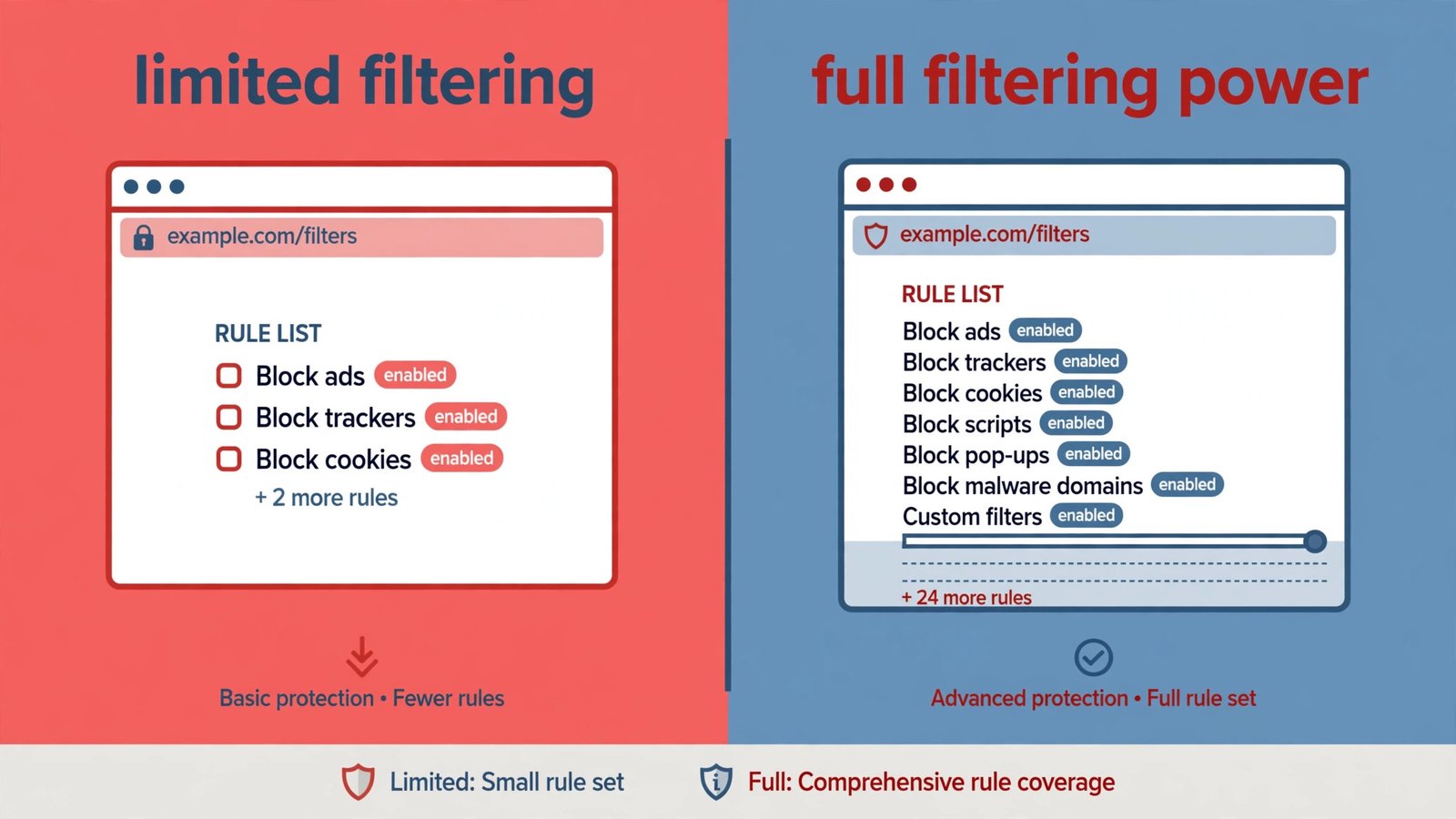
The story in one paragraph: Google makes Chrome, Google sells YouTube ads, and Google used its control of the browser to weaken ad blockers. The weapon was Manifest V3, the new extension platform that replaced the webRequest API blockers used for real-time filtering with a declarative system that caps how many filtering rules an extension can use. Chrome disabled Manifest V2 extensions for regular users in July 2025 (Chrome 138), and removed the last enterprise exceptions in Chrome 139. The full version of uBlock Origin, the gold-standard free blocker, simply cannot run on current Chrome anymore.
Meanwhile YouTube escalated on its own side. Since 2023 it has run detection popups and playback blocks against ad-block users, and since 2025 it has been testing server-side ad insertion: stitching ads directly into the video stream so they arrive as part of the content rather than as separate requests a blocker can intercept. It doesn’t hit everyone at once; implementation varies by user, region, and experiment group. But the direction is obvious, and no extension can promise permanent victory against it. This 2026 breakdown of YouTube’s countermeasures tracks both fronts well.
If you only want the setup steps, skip to Phase 1 for Chrome or Phase 2 for Firefox. Everything above is the why; the fixes start there.
What you’ll need
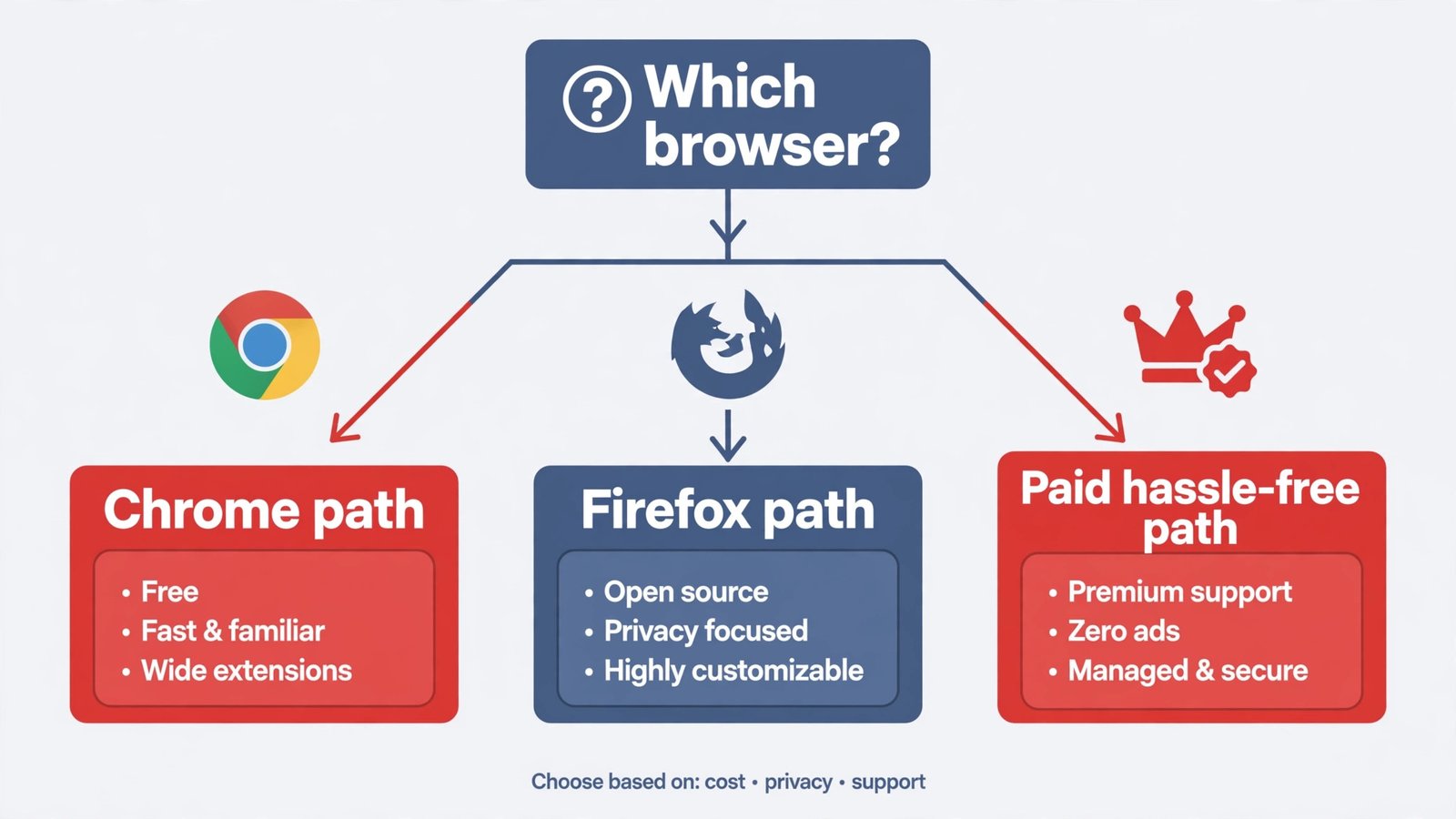
Nothing to buy. The only decision is the one most guides bury: are you staying on Chrome or switching browsers? Your answer determines everything below, because the best blocker for YouTube in 2026 isn’t an extension. It’s Firefox plus an extension.
Phase 1: Staying on Chrome, install uBlock Origin Lite
If switching browsers is a non-starter, install uBlock Origin Lite, the official Manifest V3 version by the same developer, Raymond Hill. Chrome will not convert your old uBlock Origin automatically; you install Lite separately from the Chrome Web Store.
- Remove the disabled full uBlock Origin from chrome://extensions to avoid conflicts.
- Install uBlock Origin Lite from the Chrome Web Store.
- Open Lite’s options and set the default filtering mode to Complete. This is the step everyone skips; the default mode is deliberately conservative.
- On YouTube, give it a day. Filter lists update automatically, and most pre-roll and mid-roll ads disappear.
Know what you’re giving up: Lite has no dynamic filtering, no full element picker, and no scriptlet injection, so it adapts to YouTube’s new tricks more slowly than the full version. YouTube Shorts ads and some mid-rolls slip through more often than on Firefox. It’s the best Chrome can offer now, which is another way of saying Chrome is the problem. This detailed Lite vs. full comparison documents exactly what’s missing.
Phase 2: Switching to Firefox, unlock the full uBlock Origin
Mozilla kept supporting Manifest V2 alongside V3, so the full uBlock Origin runs on Firefox with its original filtering power: dynamic filtering, rapid filter-list updates, and the element picker. In 2026 testing across multiple reviewers, Firefox plus full uBlock Origin blocks YouTube ads the most consistently of any free setup, and it keeps pace with YouTube’s countermeasures because the filter maintainers can respond without MV3 handcuffs.
- Install Firefox and import your Chrome bookmarks, passwords, and history during setup.
- Install uBlock Origin (the full version) from the Firefox Add-ons store.
- Leave the default filter lists on; they’re curated by the maintainers and update themselves.
- If YouTube ever shows you an ad-block warning, update the filter lists manually from the extension dashboard and reload. That resolves nearly every flare-up.
Two bonuses: Firefox for Android runs the full uBlock Origin too, so your phone gets the same protection, and Firefox’s extension model means this setup isn’t living on borrowed time the way Chrome workarounds are. If your browser has been feeling sluggish generally, our guide on how to fix a slow web browser pairs well with a fresh Firefox install.
Phase 3: The options that sidestep the fight
Extensions aren’t the only answers, and for some people they aren’t the best ones:
- Brave Shields. Brave’s built-in blocker isn’t an extension, so Manifest V3 doesn’t touch it. Solid YouTube ad blocking out of the box, no setup.
- AdGuard. Uses much of the same filter DNA as uBlock Origin and offers both an MV3 extension and system-wide apps. A good pick if you want one solution across devices.
- SponsorBlock. Different job, worth knowing: it crowdsources skipping of in-video sponsor segments, the part no ad blocker touches because it’s baked into the video itself. Pairs with any blocker above.
- YouTube Premium. The honest paid answer. Against server-side ad insertion, which no blocker can fully defeat, Premium is the only option that works by design rather than by arms race. If you watch hours daily, do the math on your time.
What doesn’t work: network-level DNS blockers like Pi-hole can’t reliably block YouTube ads, because YouTube serves ads from the same domains as the videos. And on the trust side, only install blockers from official stores under their real developer names; a fake “ad blocker” sees everything you browse, so check our guide on how to tell whether to trust a website before adding unfamiliar extensions. Power users may also like our Chrome extensions for web developers roundup.
Our take
The best ad blocker for YouTube in 2026 is Firefox with the full uBlock Origin: free, open source, and the only setup running without one hand tied behind its back. If you won’t leave Chrome, uBlock Origin Lite in Complete mode is a respectable second place that handles most ads. And if you’re tired of the arms race entirely, YouTube Premium is the only move that ends it. What I’d avoid: paid “YouTube ad blocker” apps with vague developers, DNS-only solutions for this specific job, and the old full uBlock Origin on Chrome, which is dead no matter what a tutorial from 2024 tells you.

- How to Change the Lock Screen Timeout on Windows 11 - October 25, 2026
- How to Fix the Windows 11 Taskbar Auto-Hide Problem - October 24, 2026
- How to Fix a Laptop Camera Not Working in Windows 11 - October 23, 2026