
A dead phone in an unfamiliar city is more than an inconvenience. It means no maps, no translation, no ride-hailing, and no way to contact anyone. A good portable charger is the cheapest travel insurance there is, and as a gift, it is one of those practical presents that gets used on every single trip. These picks cover every type of traveler, from the ultralight backpacker to the business flyer carrying a laptop.
What Matters in a Travel Power Bank
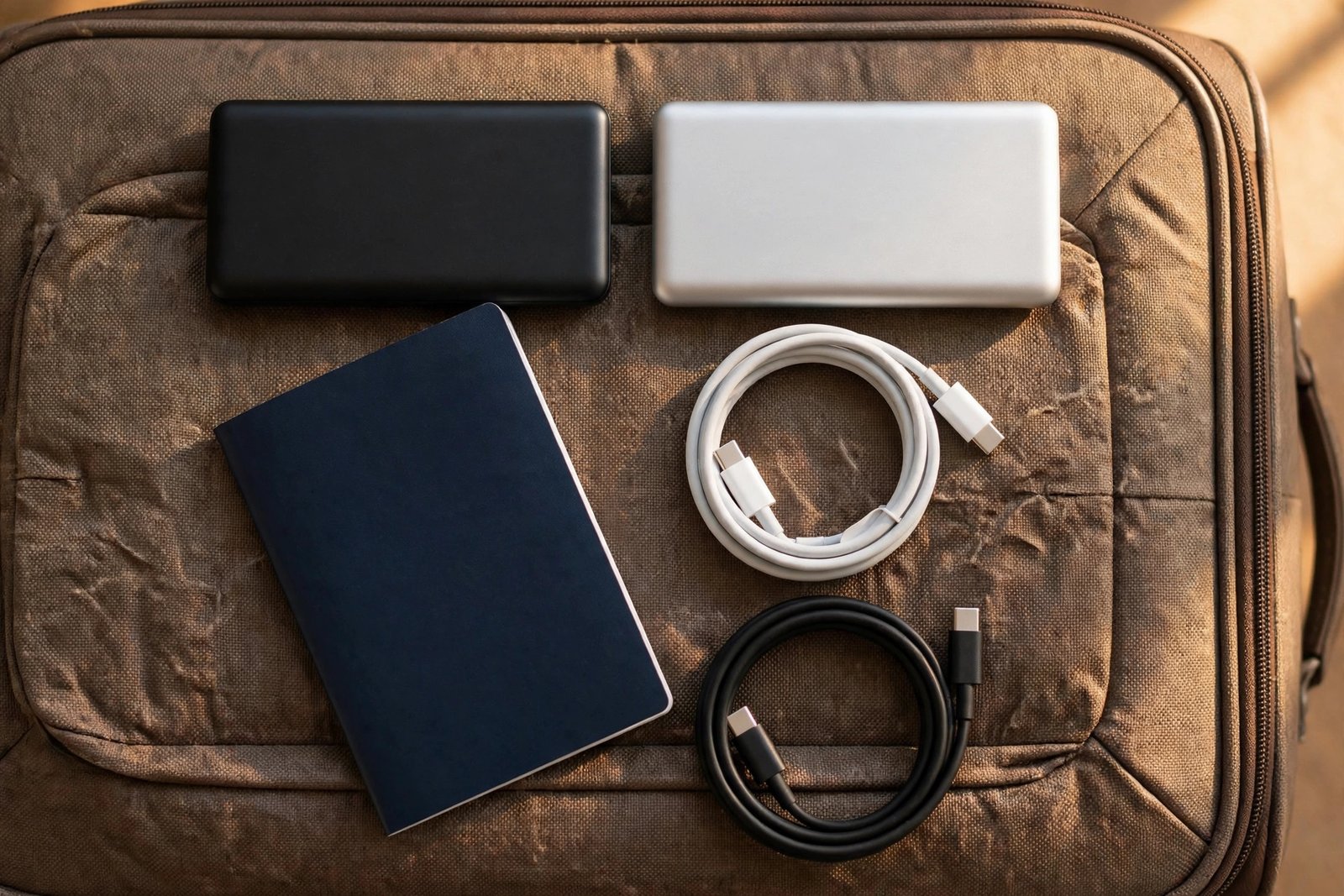
Three specs decide whether a power bank suits travel. Capacity, measured in mAh, determines how many charges you get: 10,000mAh is roughly two phone charges, 20,000mAh is four to five. Wattage determines speed and compatibility: 20W covers phones, 65W handles ultrabooks, 100W or more charges full-size laptops. Weight determines whether it actually leaves the hotel: anything over a pound tends to stay in the bag.
One more critical detail for flyers, and it changed in 2026: international rules now limit each passenger to two power banks, carried in the cabin only, and forbid recharging a power bank during the flight. Many airlines also ban using a power bank to charge a device while airborne, and some allow only one, so check the airline before packing. The energy limit still stands at 100Wh without airline approval, with 100Wh to 160Wh allowed only with approval and anything above 160Wh banned. Stick to 25,000mAh or below, and carry at most two, for hassle-free flying. The ICAO announcement sets out the current limits.
1. Anker MagGo Power Bank 10K Qi2 (Around $90)
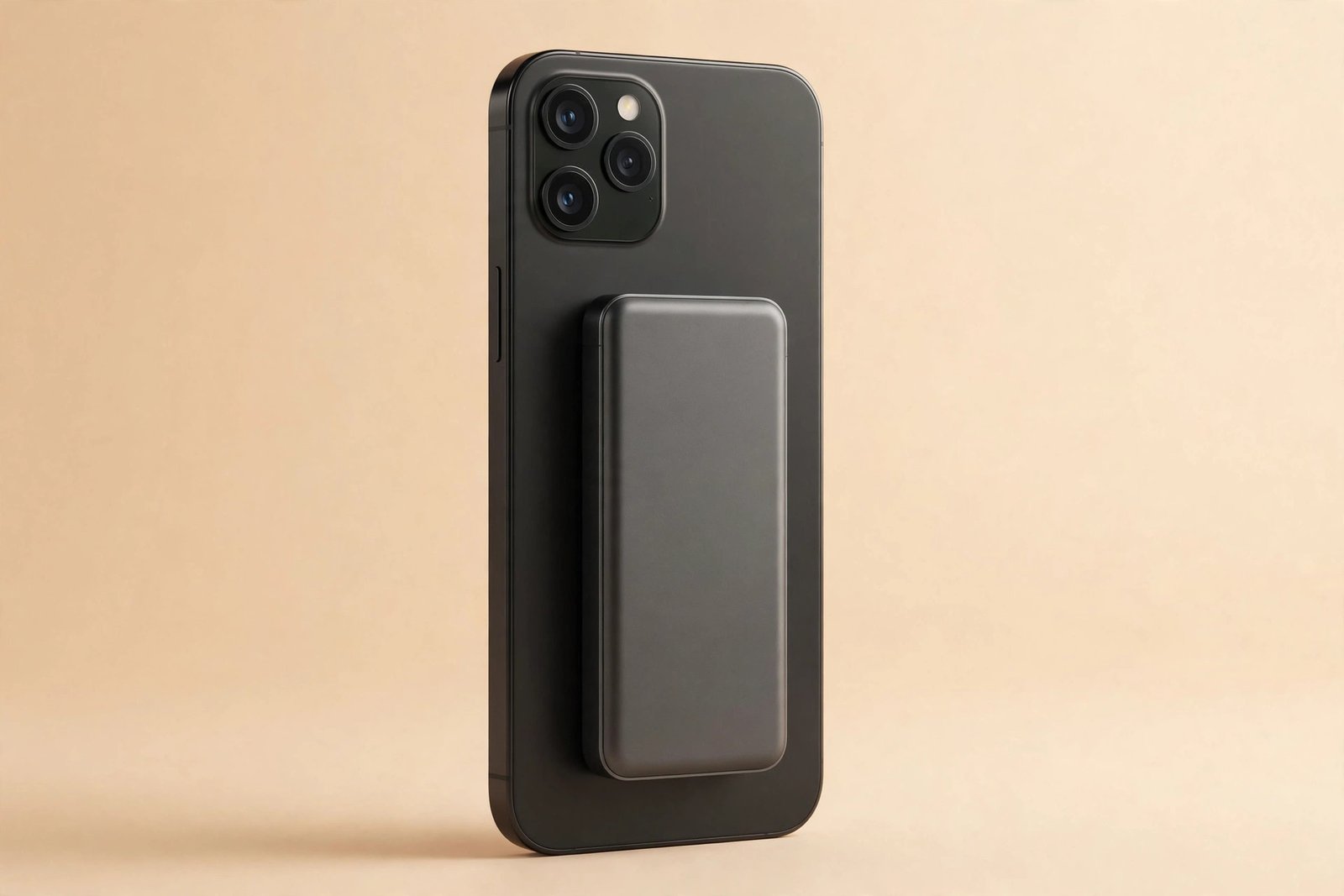
The best gift for iPhone travelers. This 10,000mAh bank snaps magnetically to the back of Qi2-compatible iPhones and charges wirelessly at 15W, no cable needed. It doubles as a phone stand when folded out, handy for video calls from a hotel desk or watching movies on a tray table.
Why it wins for travelers: The magnetic attachment means the phone and charger move as one unit. Slip them into a jacket pocket together and the phone charges while walking through the airport. No cable to tangle, no separate brick to hold. Anker’s Qi2 certification ensures full-speed wireless charging, unlike uncertified magnetic chargers stuck at 7.5W.
Best for: iPhone 15 and newer owners who travel light.
Watch out for: Wireless charging is less efficient than wired, so some energy is lost as heat. Android users need a magnetic case or ring to get the snap-on benefit. At around $90, it is a premium gift. Anker’s newer MagGo 2 Pro charges wirelessly at 25W under the Qi2.2 standard and lists at $110, so buyers who want the fastest magnetic charging should compare the two before choosing.
2. INIU 45W 10000mAh Power Bank (Around $20)
The budget travel champion. A 10,000mAh bank with 45W USB-C Power Delivery, meaning it fast-charges phones, tablets, and even some lightweight laptops. It weighs under 200 grams and carries UL2056 safety certification.
Why it wins for travelers: 45W charging at this price and weight is remarkable. It can take a modern phone from empty to around 75% in 30 minutes. The slim profile disappears into a daypack, and the price means it works as a thoughtful gift without a big spend.
Best for: Budget-conscious travelers, students, anyone who wants fast charging without the bulk. At around $20 it also fits a stocking, and the guide to tech stocking stuffers under $25 rounds up more gifts at the same price.
Watch out for: 10,000mAh is about two phone charges, so heavy users on long travel days may want the 20,000mAh picks below. No wireless charging.
3. Anker 737 PowerCore 24K 140W (Around $110)
The serious traveler’s power station. A 24,000mAh bank with 140W total output across two USB-C ports and one USB-A, enough to fast-charge a MacBook Pro, a tablet, and a phone simultaneously. A smart digital display shows real-time wattage per port and estimated recharge time.
Why it wins for travelers: Business travelers and digital nomads carry laptops that cheap power banks cannot touch. The 737 replaces a laptop charger, a phone charger, and a tablet charger with a single brick. At 24,000mAh it stays under the 100Wh airline limit (around 86Wh).
Best for: Business travelers, remote workers, anyone who flies with a laptop.
Watch out for: It weighs over a pound, so it is a bag item, not a pocket item. Anker’s own store lists it as sold out, so check retailer stock before promising it as a gift. The price puts it in premium gift territory. Overkill for phone-only travelers.
4. Charmast 10000mAh with Built-in Cables (Around $22)
A 10,000mAh bank with 22.5W output and built-in cables, plus extra USB ports. The integrated cables eliminate the most annoying part of travel charging: remembering and untangling cords. Which cables are built in depends on the color ordered: some colors carry USB-C and Lightning, while others carry two USB-C cables and no Lightning, so check the listing for the color being bought.
Why it wins for travelers: Every traveler has experienced the dead-phone panic compounded by a forgotten cable. Built-in cables remove that failure mode entirely. The three cable types cover iPhones, Android phones, and older accessories in one device.
Best for: Forgetful packers, family travelers charging multiple device types, gift buyers who want maximum convenience per dollar.
Watch out for: Built-in cables are short, designed for pocket and bag use rather than across-the-room charging. 22.5W charges a phone well, but it is not laptop tier.
5. Nitecore NB10000 Gen 4 (Around $84)
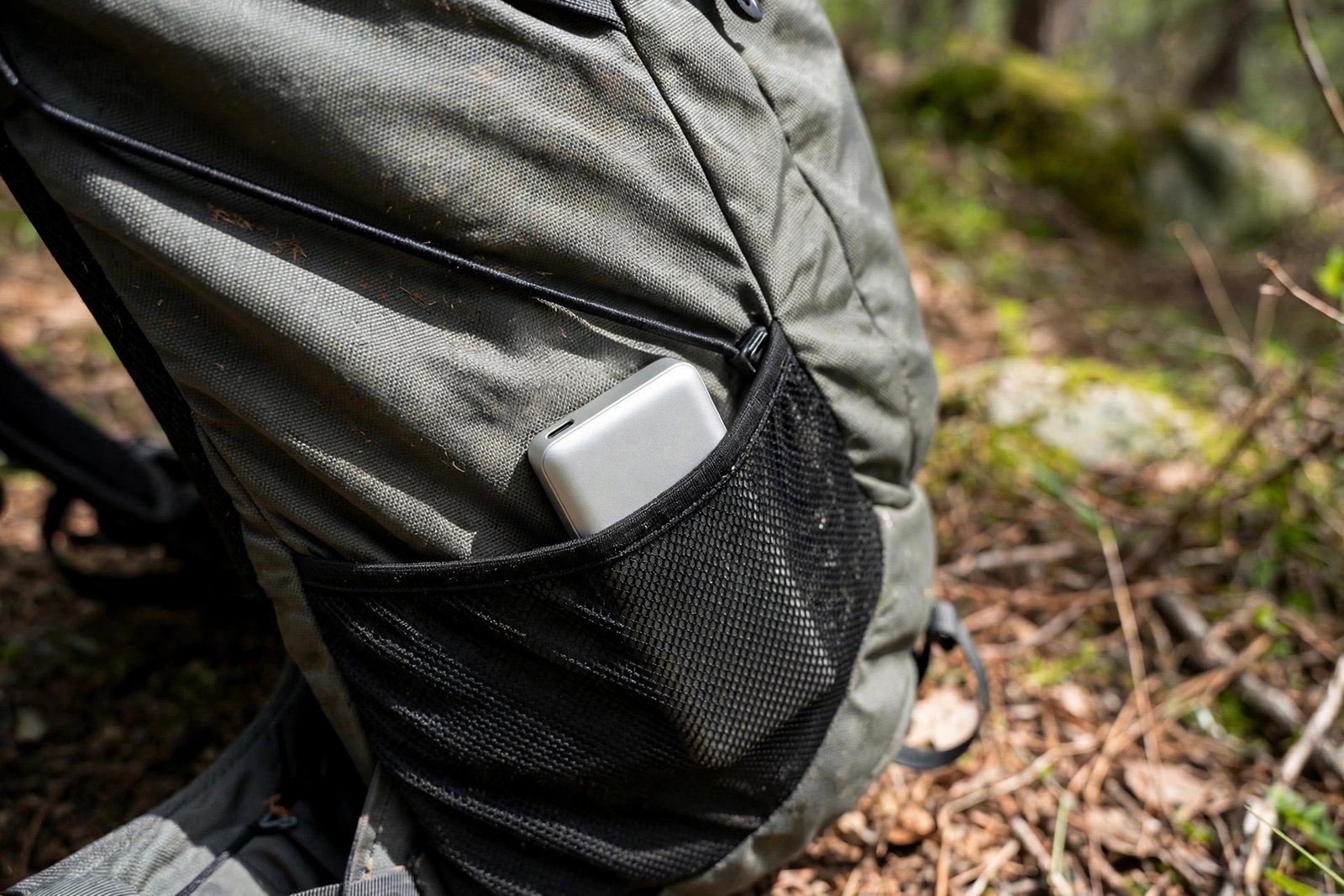
The ultralight specialist. A 10,000mAh bank weighing just 143 grams, roughly half the weight of typical banks at this capacity. Carbon fiber construction keeps it slim and durable, and the Gen 4 adds IPX7 water resistance and a second USB-C port.
Why it wins for travelers: Backpackers, hikers, and minimalists count every gram. The NB10000 Gen 4 delivers full 10,000mAh capacity at a weight that disappears into a pocket. It is a favorite in the ultralight hiking community, where it has earned its reputation over several generations.
Best for: Hikers, backpackers, ultralight travelers, runners.
Watch out for: The premium materials command a premium price for the capacity. The Gen 4 costs about $84, up from about $60 for the Gen 3 it replaces, and Nitecore has discontinued the Gen 3. 22.5W output covers phones but not laptops, and the two ports share 15W when both are in use. The minimalist design has no display, just simple indicator lights.
6. UGREEN Nexode 12000mAh 100W (Around $35)
The compact high-power sweet spot. A 12,000mAh bank pushing 100W through USB-C, enough for most ultrabooks and all phones and tablets, in a body barely larger than a phone. Frequently recommended by major tech publications in 2026.
Why it wins for travelers: It bridges the gap between phone banks and laptop bricks. Travelers who carry an ultrabook but do not want a pound of battery get real laptop charging in a pocket-friendly size. The 100W output is the threshold where ultrabook charging becomes practical.
Best for: Ultrabook owners, travelers who want one bank for all devices without the weight penalty.
Watch out for: 12,000mAh is about two and a half phone charges, less than the 20,000mAh bricks. Sustained 100W output drains it quickly, so it is best for top-ups rather than full laptop recharges.
Quick Comparison
| Power Bank | Price | Capacity | Max Output | Weight Class |
|---|---|---|---|---|
| Anker MagGo 10K Qi2 | ~$90 | 10,000mAh | 15W wireless | Light |
| INIU 45W 10K | ~$20 | 10,000mAh | 45W | Light |
| Anker 737 24K | ~$110 | 24,000mAh | 140W | Heavy |
| Charmast 10K | ~$22 | 10,000mAh | Standard | Light |
| Nitecore NB10000 Gen 4 | ~$84 | 10,000mAh | 22.5W | Ultralight |
| UGREEN Nexode 12K | ~$35 | 12,000mAh | 100W | Light |
Buying Advice
Match the bank to the traveler’s devices. Phone-only travelers are well served by any 10,000mAh pick. Laptop carriers need 65W or more, which narrows the field to the Anker 737 and UGREEN Nexode. iPhone users get outsized value from the magnetic MagGo.
Buy from reputable brands. Cheap no-name power banks have been linked to swelling, overheating, and inflated capacity claims. Anker, INIU, UGREEN, Nitecore, and Charmast all have established track records and real safety certifications. The few dollars saved on an unknown brand are not worth the risk in something that sits in a bag next to a passport. Before gifting a bank already owned, check it against the 2025 Anker recalls: the PowerCore 10000 (model A1263) and five more models (A1257, A1647, A1652, A1681, and A1689) were recalled after reports of overheating, and Anker checks serial numbers on its recall pages. None of the six picks here is a recalled model.
Frequently Asked Questions
Can I bring a power bank on a plane?
Yes, in carry-on luggage only, never in checked bags, and at most two per passenger under the 2026 international rules. The limit is 100Wh per battery without airline approval, which covers all power banks up to about 27,000mAh, and every pick in this guide complies. Never recharge the bank during the flight, and check whether the airline also bans charging devices from it while airborne. Keep the bank in the seat pocket or under the seat, where crew can reach it, rather than in the overhead bin.
How many phone charges does 10,000mAh provide?
Roughly two full charges for most modern phones, after accounting for energy lost as heat during charging and voltage conversion. A phone with a 4,500mAh battery will get about 1.8 to 2 full charges from a 10,000mAh bank in real-world use.
What wattage do I need to charge a laptop?
Ultrabooks typically need 45W to 65W, while larger laptops and MacBook Pros want 90W to 140W. Phone-only charging needs just 18W to 30W. Check the wattage printed on the laptop’s original charger and match or exceed it with the power bank.
Are magnetic wireless power banks worth it?
For iPhone users who value convenience, yes. The snap-on design means the phone charges while in a pocket or hand, with no cable to manage. The trade-off is slower charging and some energy loss compared to wired. For maximum speed and efficiency, wired USB-C remains better.

- How to Fix an External Drive Not Showing Up on Windows 11 [Fix] - November 27, 2026
- How to Fix a Black Screen With Cursor After Login on Windows 11 (5 Fixes) - November 26, 2026
- How to Check If Windows 11 Is Activated (3 Ways) - November 24, 2026