
Thinking about selling online but not sure it is worth the effort? Here are honest answers to the questions every new seller asks.

Is selling online really cheaper than opening a shop?
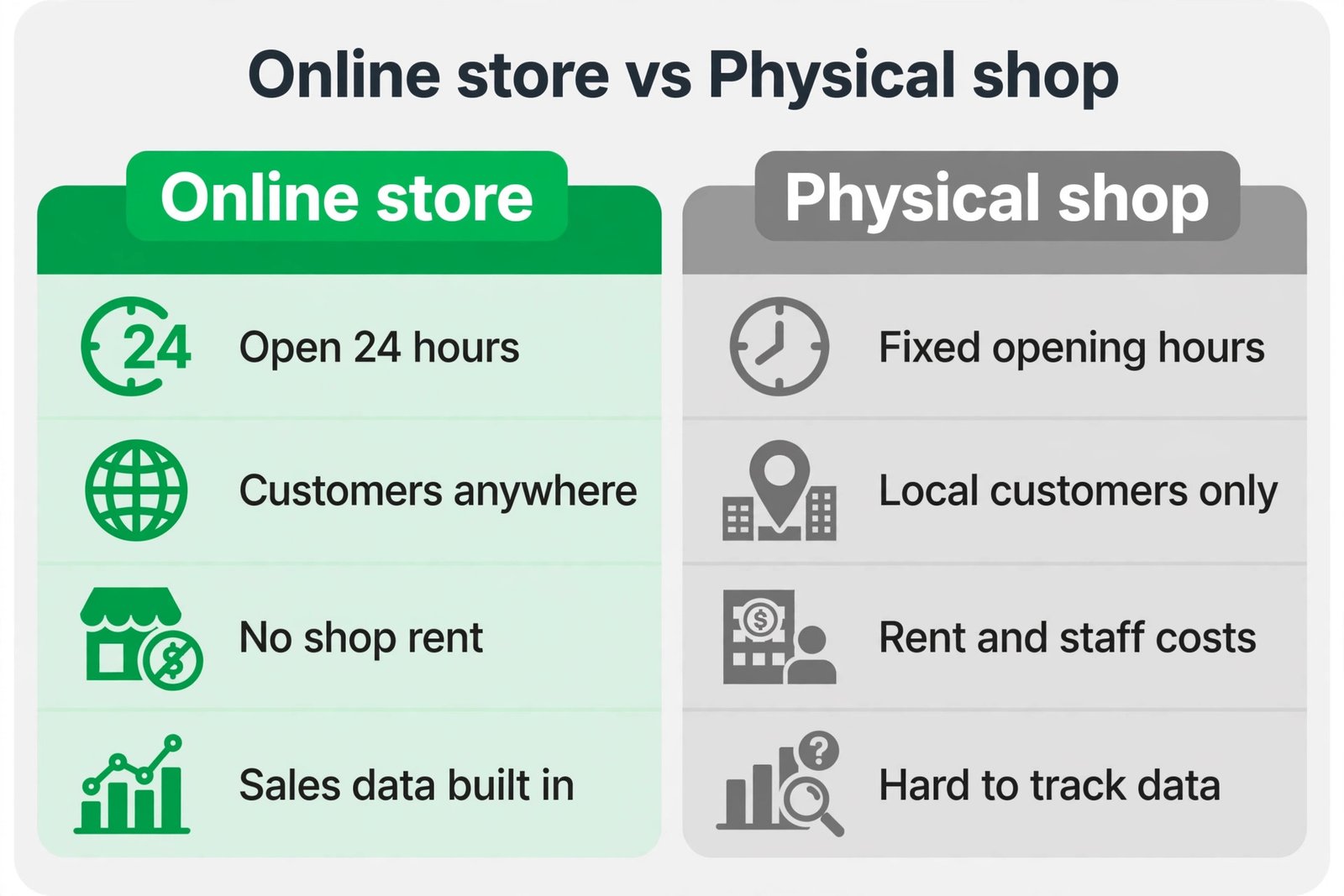
Yes, by a wide margin. A physical shop means rent, deposits, utilities, shop staff, and inventory sitting on shelves whether it sells or not. An online store replaces almost all of that with a monthly platform fee and payment processing costs. You can start on a marketplace with no upfront fee at all and pay only when something sells. That does not mean it is free: product photography, shipping materials, advertising, and your time all cost money. But the gap between “launch an online store” and “sign a commercial lease” is enormous, and that is why most small sellers start online.
Can a small seller actually reach customers outside their city?
This is the single biggest structural advantage of selling online. A physical shop serves foot traffic; an online store serves search traffic, which does not care where you live. A seller in a small town can ship to customers across the country from a spare room, and marketplaces handle the discovery part by putting your products in front of people already searching for them. International selling adds customs and shipping complexity, but even staying domestic usually multiplies your potential customer base far beyond what any single storefront could reach.
Do I need technical skills to start selling online?
No. The technical barrier that existed ten years ago is mostly gone. Hosted platforms like Shopify walk you through setup with templates: add products, set prices, connect a payment method, and you are live. Marketplaces are simpler still, since they handle payments, and much of the trust-building, for you. The skills that actually matter are not technical: writing clear product descriptions, taking decent photos with your phone, answering customer messages promptly, and shipping on time. If you can use email and a smartphone, you can run a basic online store.
How do online sellers find customers?
Through channels a physical shop cannot use effectively. Search engines bring buyers who are already looking for your product. Social platforms let you sell directly inside Instagram, TikTok, and Facebook, where discovery happens now. Email lists turn one-time buyers into repeat customers at almost no cost. And marketplaces contribute their own built-in traffic. The honest caveat: none of this is automatic. Getting found online takes consistent effort in photos, listings, and reviews, especially in the first months. But every channel is measurable, so you can see what works and put more effort there, which a shop window never told you.
What are the real downsides of selling online?
Competition is the big one. Your store sits one click away from thousands of sellers offering similar products, often cheaper. Customers cannot touch your product before buying, so returns and “not as described” complaints are part of the job. You depend on platforms whose fees and rules can change. Shipping logistics, damaged parcels, and delivery delays become your problem. And building trust takes longer without a physical presence: reviews, clear policies, and responsive service have to do the work a shopfront used to do. None of these are deal-breakers, but go in with eyes open.
Is it too late to start selling online in 2026?
No, but the easy version of it is over. The days of listing anything and watching it sell are gone. What still works is specificity: a defined niche, a product you understand better than the average seller, and service that earns reviews. AI tools have actually lowered the bar for newcomers again, helping with product descriptions, pricing research, and customer messages. Start small, sell what you know, and treat the first months as paid learning. Sellers who do that consistently outperform sellers who wait for the perfect moment.
Our take
Selling online remains the cheapest way to test whether a product idea has legs. The benefits are real: lower costs, wider reach, your store open around the clock, and data that tells you exactly what is working. The costs are real too, mostly in competition and the effort of being found. Start on a marketplace to learn the ropes with minimal risk, and consider your own storefront once you have proof that people want what you sell. If earning online interests you more broadly, our guide to the best freelancing websites for students covers the service-selling side of the same coin.

- How to Stop Android Auto-Connecting to Open Wi-Fi Networks - October 24, 2026
- How to Stop iPhone Apps Asking for Ratings and Reviews - October 23, 2026
- How to Turn Off HDR in Windows 11 When Colors Look Washed Out - October 22, 2026