
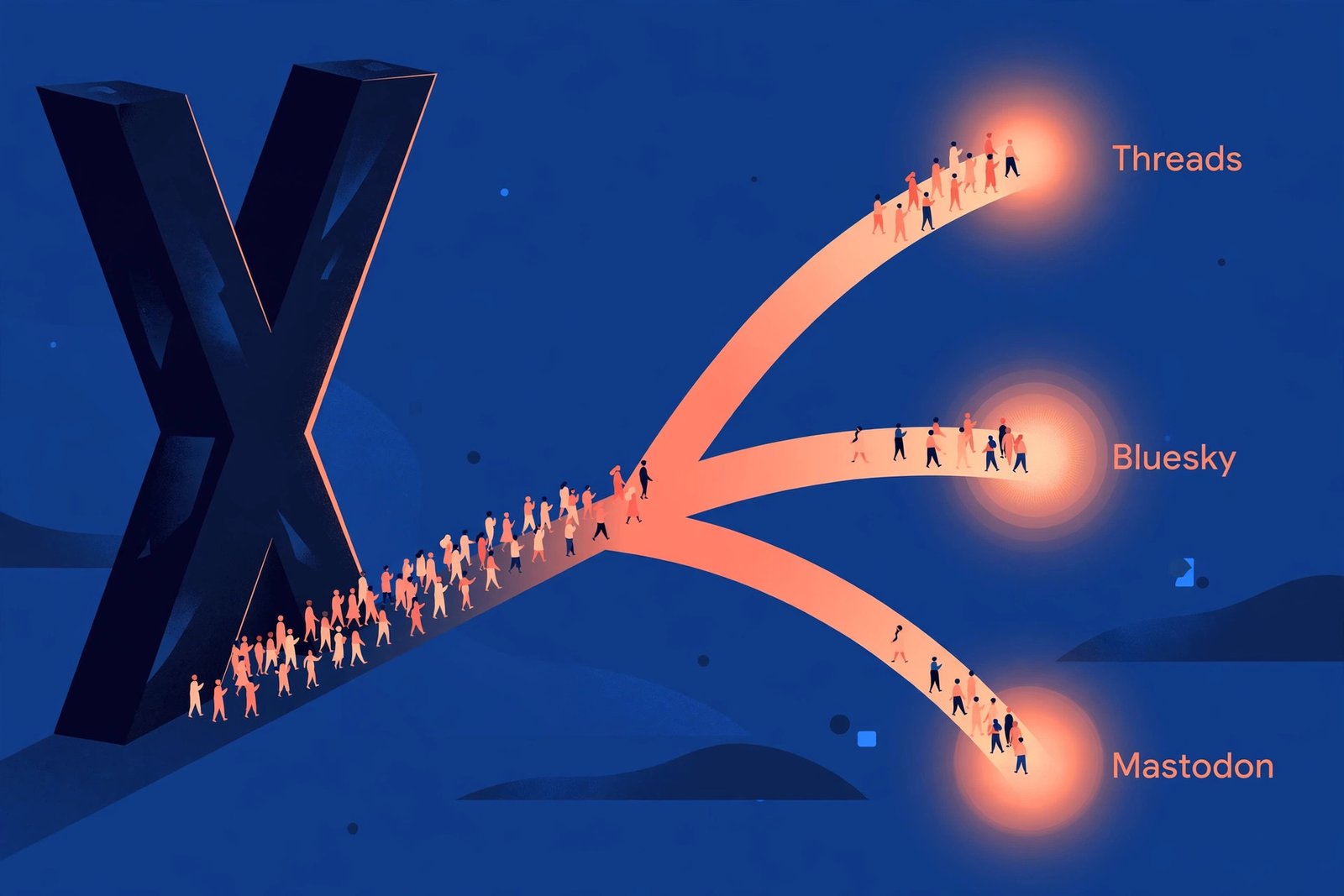
X isn’t the public square anymore, and pretending otherwise costs you reach, trust, and time. Threads has the crowd, Bluesky has the old-Twitter feel, and Mastodon has the principles. Here’s the honest case for leaving, and a practical plan for moving without losing your people.
Why X stopped being worth it
Let me make the case plainly, because “just leave” advice usually skips the why. X’s decline isn’t one scandal; it’s the business model working as designed. The algorithmic For You feed decides what you see, verification is a subscription instead of an identity check, and the ad load keeps climbing because engagement farming pays better than conversation. Then in January 2026, X’s own AI assistant Grok shipped an image-editing feature with so few safeguards that it could generate sexualized deepfakes of real people without their consent, drawing condemnation from political leaders worldwide. A platform that ships that, then shrugs, is telling you exactly how much it values the humans on it.
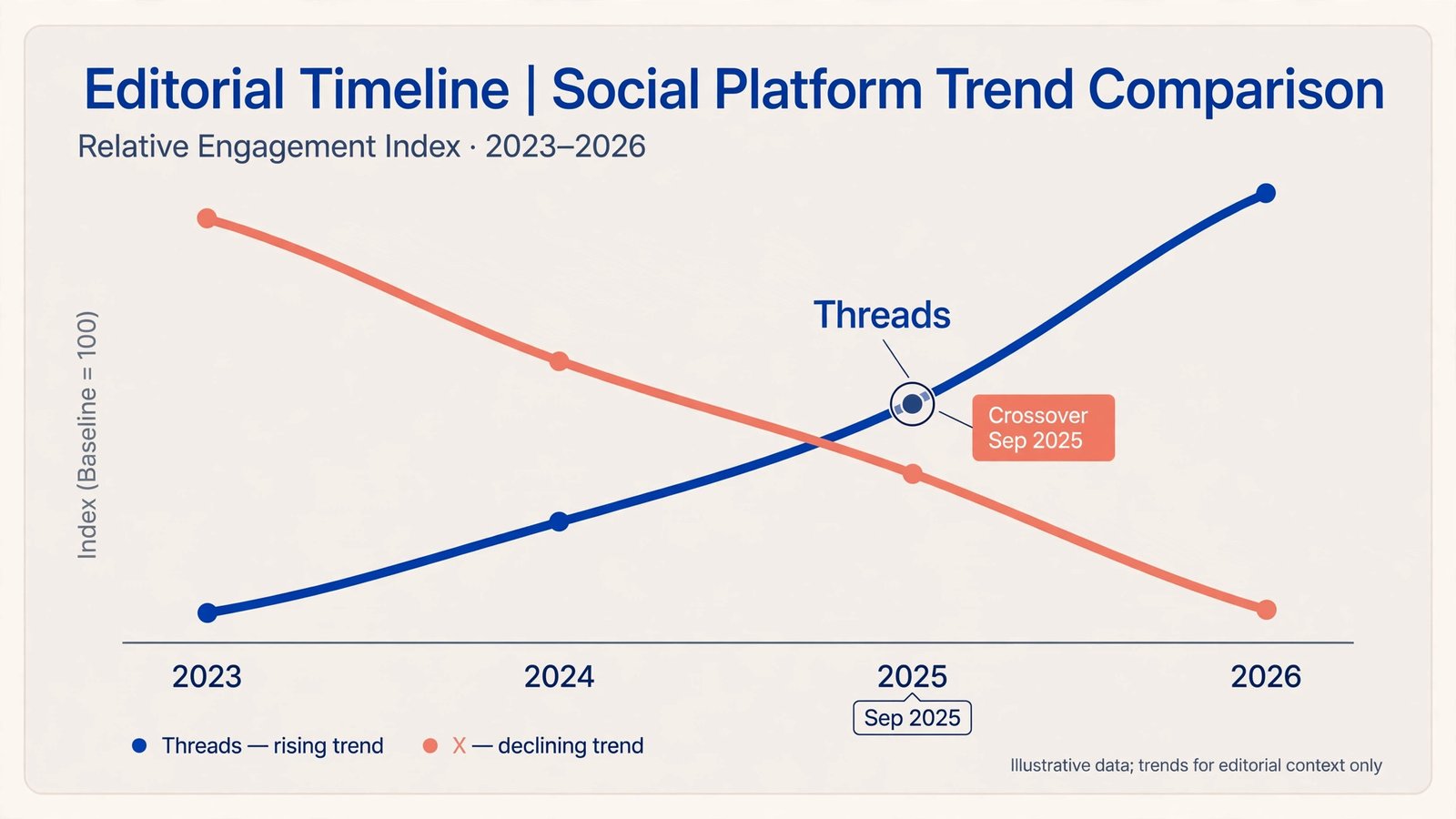
The numbers tell the same story. Threads overtook X in daily active users in September 2025, and by January 2026 Similarweb measured roughly 141.5 million daily Threads users against about 125 million for X, via TechCrunch reporting. X’s user count has been sliding since 2024 while Threads keeps climbing. You don’t have to hate X to read that chart; you just have to decide whether you want to build your audience on a platform in managed decline. Android Police’s breakdown of the Similarweb data is worth a read if you want the full picture.
If you only want the migration steps, skip ahead to “Phase 1: pick your lane.” The rest of this section is the argument; the steps start there.
What to look for in a replacement
Before comparing apps, decide what actually matters to you. Rank these four:
- Your people. The best-designed network is worthless if nobody you know posts there. Check where your specific community went, not where the tech press says they went.
- Moderation you can shape. Bluesky lets you subscribe to other people’s moderation filters; Mastodon gives each server its own rules; Threads gives you Meta’s rules. Decide how much control you want.
- Portable identity. On Bluesky and Mastodon you can move servers without losing followers. On Threads and X, your handle is a tenant of someone else’s building.
- No paywall on basics. Posting, reading, and messaging should not require a subscription. This is the bar X keeps tripping over.
Phase 1: Pick your lane
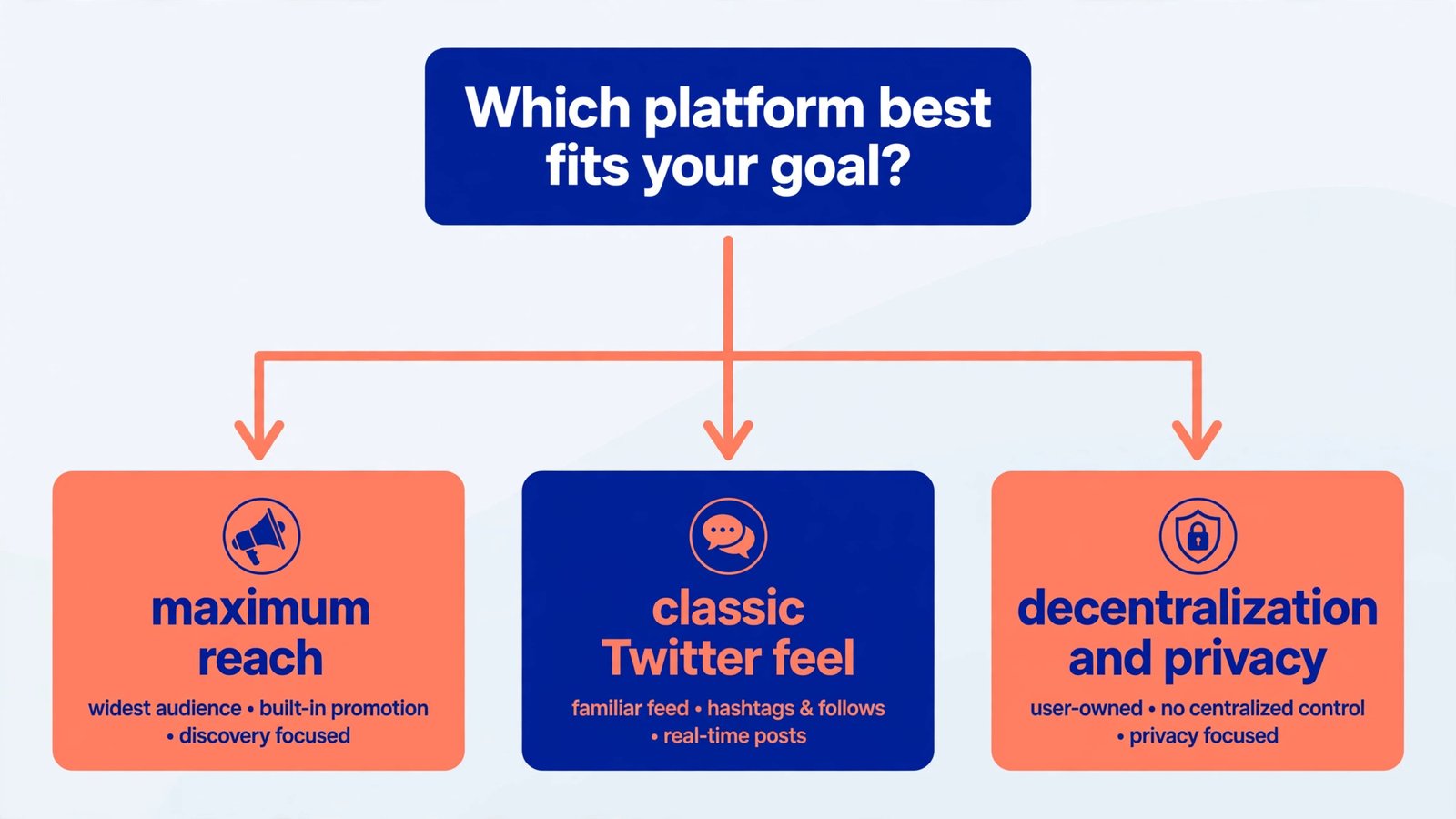
There is no single “new Twitter.” There are three credible answers, and they serve different people.
Threads: the crowd
Meta’s app passed 400 million monthly users in 2026 and rides on your Instagram graph, which means your followers are probably already there. The feed is algorithmic and Meta-flavored, hard news gets deprioritized, and you’re inside Meta’s moderation and data machine. But if your goal is reach, nothing else in this list is close. This Bluesky vs. Mastodon comparison is useful context for what Threads is not: decentralized.
Bluesky: the old-Twitter feel
Built on the open AT Protocol, Bluesky is the closest thing to classic Twitter: chronological options, custom swappable feeds, composable moderation you can tune yourself. Roughly 43 million registered users with 3.5 to 4 million daily actives in 2026: big enough to be lively, small enough that your posts don’t vanish into a void. If you miss 2015 Twitter, start here.
Mastodon: the principles
The open-source federated original: no ads, no algorithm, no owner, around 10.5 million accounts across thousands of independent servers. The price is onboarding friction (pick a server, learn federation etiquette) and a smaller, quieter network. Choose it if you care more about how the platform works than how big it is. Privacy purists, journalists, and open-source communities never really left.
Phase 2: Move your follow graph
Signing up is the easy part. Rebuilding the network is the actual work, and each platform has a shortcut.
- On Bluesky, use starter packs. These are curated follow-lists (journalists, scientists, your old Twitter mutuals) you can subscribe to in one tap. Find packs for your niche, follow three or four, and your feed fills up in an afternoon. Then turn on a couple of custom feeds to escape the default firehose.
- On Threads, import your Instagram graph. Follow the same accounts you follow on Instagram and let the algorithm do the rest. Post natively for two weeks before judging it; Threads rewards consistent posting more than X ever did.
- On Mastodon, pick your server like a neighborhood. General servers like mastodon.social are fine to start, but topic servers (tech, journalism, art) give you a better local timeline. Then use the follow-import tools to pull in accounts from other servers, and introduce yourself with an #introduction post: it genuinely works there.
Give it a month of real posting before you declare a winner. Cross-posting tools exist, but the platforms reward native behavior, so pick one primary home and treat the others as outposts. Juggling several social identities at once gets confusing fast; if you’re managing multiple accounts during the transition, our guide on how to create a second Facebook account has transferable habits for keeping logins and notifications straight.
Phase 3: Settle in without burning the bridge
Don’t delete your X account on day one. Squatters take good handles, old links to your profile rot, and some communities (customer support accounts, local emergency updates) still live there. Instead: pin a post pointing to your new home, turn off notifications, remove the app from your home screen, and let the account go dormant. You keep the handle and the archive; you stop feeding the algorithm.
While you’re rebuilding, remember that audience building works differently off X. Short-form video now does the discovery work that text threads used to do, so live streaming and video apps deserve a slot in your new toolkit, and creators should read our Pinterest SEO tips for one more underpriced discovery channel.
Our take
Here’s the honest verdict: most people should go to Threads for reach and Bluesky for conversation, and stop pretending one app will replace everything X was. The fragmentation is real and it’s annoying; the old global town square is gone and it’s not coming back. But the three-way split is also healthier than what it replaced. Pick the lane that matches what you actually used Twitter for, move your people deliberately, and let X fade into a read-only utility. That’s not quitting social media. That’s choosing better landlords.

- iPhone Duo: Should You Buy Apple’s First Foldable? - October 16, 2026
- Best Handheld Gaming PCs in 2026: Steam Deck, ROG Ally, and Legion Go - October 16, 2026
- How to Turn Off iOS Connectivity Assist (and When You Should Leave It On) - October 15, 2026