
Home security isn’t complicated. Most break-ins happen because doors and windows are left unlocked or because homes look easy targets. You don’t need expensive systems or constant monitoring. Simple, practical steps work better than anything else.
This guide shows you exactly how to improve home security using methods that actually work. I’ll cover what matters most first, then go deeper into each area. By the end, you’ll know exactly what to do today and what changes to make this week.
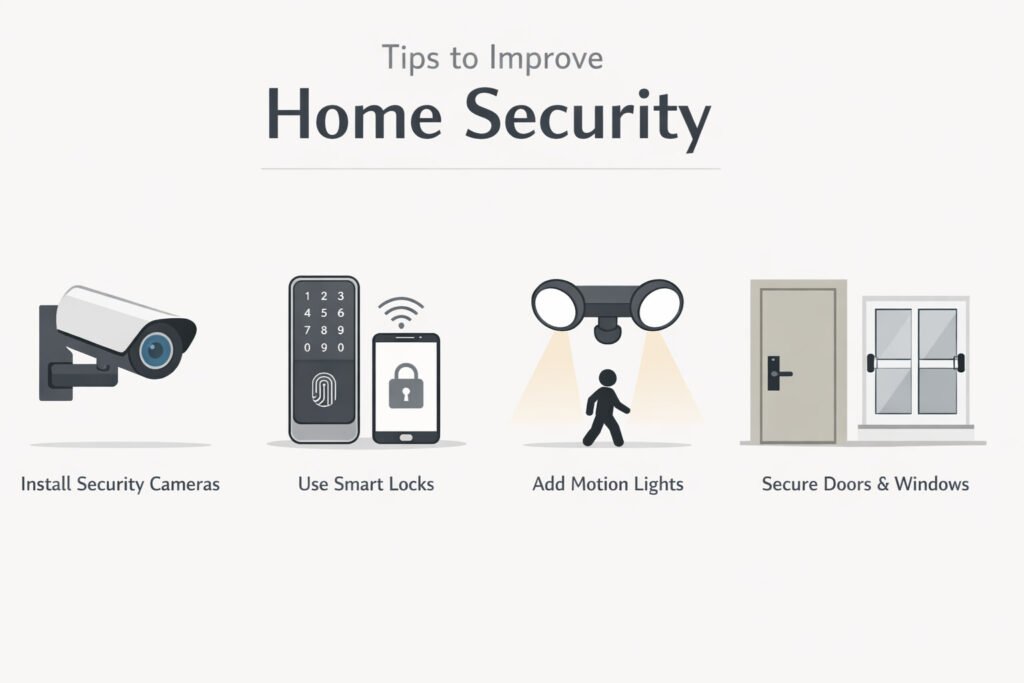
The main answer: Start with locks on all doors and windows, add outdoor lighting, remove hiding spots, and use visible deterrents. Then add layers like cameras or alarms if you want extra protection.
Why Home Security Matters Right Now
Break-ins happen more often than most people think. In the United States, about one burglary occurs every 30 seconds, according to the FBI’s crime data. Most burglars spend less than 60 seconds trying to enter a home. If entry takes longer, they usually leave.
This is good news for you. Making your home harder to enter quickly stops most criminals. They want easy targets. They don’t want challenge or attention.
Home security also protects your peace of mind. You sleep better knowing doors are locked. You worry less when traveling. Your family feels safer. That matters just as much as preventing actual crimes.
The Foundation: Doors and Locks
Front Door Security
Your front door is the main entry point for most burglaries. It’s also the easiest to secure.
What you need:
A solid door matters more than most people realize. Hollow interior doors offer almost no protection. Solid wood doors or metal-reinforced doors work much better. If you have a hollow door, replacing it should be your first move.
The frame matters too. A strong door in a weak frame won’t help. The frame should be reinforced with metal on the strike plate side. This is the area where the lock bolt enters the frame.
Deadbolt locks are essential:
Standard key-in-knob locks are weak. The knob itself is often just plastic. Deadbolt locks are different. They use a solid metal bolt that extends deep into the frame. A good deadbolt is hard to break or pick.
You need:
- Grade 1 or Grade 2 deadbolt (these are the strongest residential options)
- Deadbolt with at least 1-inch throw (the bolt extension)
- Reinforced strike plate with 3-inch screws that go into the frame’s solid wood
Install your deadbolt about 6 inches above the doorknob. This prevents someone from kicking the door open.
Test your door right now:
Stand outside your front door. Push hard against it near the deadbolt. If the door moves, your frame is weak. If the door feels solid and doesn’t bend, you’re good.
Back Doors and Side Doors
Back doors are often forgotten. Many burglars use back doors because they’re less visible from the street.
Same rules apply here:
- Install deadbolts on all back and side doors
- Use solid doors, not hollow ones
- Make sure frames are strong
Sliding glass doors need special attention. Standard locks on these doors are very weak. A simple pry bar opens them easily.
For sliding glass doors, add:
- A metal or wooden bar in the track (a baseball bat works in a pinch)
- Security pins that prevent the door from opening
- A sliding door lock designed for security
Windows: Easy Targets You Can’t Ignore
Windows are responsible for about 23% of break-ins. Most are ground-floor windows. Many homeowners ignore them because they think windows are hard to break. They’re not.
Ground Floor Window Security
All ground-floor windows need locks. This includes basement windows. Check every single window right now.
Window lock types:
Single-hung and double-hung windows usually have simple latches. These latches hold the window closed but don’t prevent opening from outside. You need locks.
Options include:
- Pin locks (drill a hole through the frame, insert a pin to prevent opening)
- Window locks that prevent opening more than 4 inches
- Combination locks that allow ventilation but prevent entry
Casement windows (ones that open outward like doors) usually have better locks built in. Check yours anyway.
Sliding windows:
These are as weak as sliding doors. Add the same security measures. A bar in the track is easiest.
Upper-Floor Windows
Don’t ignore these. Second-story burglaries happen, especially from fire escapes, roofs, or nearby trees. The same locks apply.
Remove tree branches near upper windows. Burglars use them to climb.
Outdoor Lighting: Your Best Cheap Defense
Burglars hate light. They want darkness. Good outdoor lighting stops most break-in attempts before they start.
Where to Place Lights
Focus on:
- Front entrance (brightest area)
- Back door and patio
- Sides of the house (especially shadows)
- Garage entrance
- Dark corners where someone could hide
Types of Outdoor Lighting
Motion sensor lights:
These turn on when movement is detected. They’re excellent because they startle people and draw attention. Most burglars leave immediately when lights turn on suddenly.
Cost: $15 to $40 each
Dusk to dawn lights:
These turn on automatically at sunset and off at sunrise. They keep your home visible all night. Good for general security and convenience.
Cost: $10 to $30 each
LED floodlights:
Brightest option. Use multiple lights for complete coverage. Energy efficient and last years.
Cost: $20 to $60 each
Installation Tips
Position lights so they illuminate entry points but not so high that they create deep shadows. A light 8-10 feet high works well for most homes.
Make sure lights cover the entire perimeter. One light on the front door isn’t enough if the back is dark.
Consider smart bulbs that you can control from your phone. You can turn them on remotely to make it look like someone’s home.
Remove Hiding Spots
Burglars need places to work without being seen. Remove those places.
Outside your home:
- Trim bushes away from windows and doors (3-foot clearance minimum)
- Cut tree branches that hang over the roof
- Remove piles of wood, boxes, or debris
- Don’t store ladders where they can be used to reach upper windows
- Keep the area around your home visible from the street
On your property:
- Don’t leave tools outside (they can be used to break in)
- Store trash cans in a garage or enclosed area if possible
- Remove dead branches and overgrown vegetation
- Make sure address numbers are visible and lit at night
- Keep porch clear of packages and clutter
A clear, visible yard says “I maintain this property and notice what happens here.” That message alone deters many burglars.
Visible Deterrents: What Actually Works
Some deterrents work better than others. This matters.
Alarm System Signs and Stickers
Real alarm system signs are effective. Burglars know these homes have alarms. They usually move to the next target.
Fake signs without an actual system? Less effective. Most experienced burglars can tell the difference.
If you use signs, back them up with a real system eventually. The sign plus the system is strongest.
Security Cameras
Visible cameras work as deterrents. Studies show homes with cameras have lower burglary rates.
A visible outdoor camera at the front entrance costs $50 to $200 and works well. It doesn’t need to be the most expensive model. Burglars just need to know they’re being recorded.
For best results:
- Make the camera obviously visible
- Point it at entry points
- Use a red light to indicate recording (even fake red lights help)
Dogs and Dog Signs
An actual dog is one of the best deterrents. Dogs alert you to intruders and most burglars avoid homes with dogs.
Dog signs alone are less effective, but they help. Use them anyway.
Doors and Windows: Quick Security Checklist
Here’s what you should check this week:
| Security Element | Status | Action Needed |
|---|---|---|
| Front door | Solid wood or metal | Replace if hollow |
| Front door deadbolt | Grade 1 or 2 | Install if missing |
| Deadbolt strike plate | 3-inch screws | Reinforce if needed |
| Back door | Solid, deadbolted | Install deadbolt if missing |
| Sliding doors | Secured | Add bar or pin lock |
| Ground floor windows | All locked | Install locks if needed |
| Upper floor windows | All locked | Install locks if needed |
| Outdoor lighting | Motion and dusk/dawn | Install lights this week |
| Landscaping | Clear of hiding spots | Trim bushes and trees |
| Visible camera | At entrance | Optional but helpful |
Inexpensive Home Security Improvements You Can Make Today
Under $50 Total Investment
- Install a deadbolt lock: $10 to $25
- Add motion sensor light: $15 to $40
- Get window locks: $20 to $50
- Security stickers and signs: $5 to $15
Start here. These are the basics. Most homes need nothing more expensive.
$50 to $200 Investment
- Multiple outdoor lights with sensors
- Visible security camera
- Door and window sensors that alert you
- Reinforced door frame kit
These add layers to your security. They’re still affordable.
$200 and Up
- Complete alarm system with professional monitoring
- Ring or similar doorbell camera systems
- Smart home security bundle
Only consider these after you’ve covered the basics.
Smart Home Security Tools Worth Considering
Technology can help, but it’s not required for good security.
Let you see who’s at your door from anywhere. Ring, Nest, and others offer these for $100 to $300. Helpful for seeing packages and unexpected visitors.
Door and window sensors:
Alert you when doors or windows open. Useful if you’re away. Cost: $30 to $80 per door or window.
Smart locks:
Let you unlock doors from your phone. Convenient for letting people in without a key. Cost: $150 to $400.
Alarm systems with monitoring:
Professional monitoring means someone calls the police if your alarm triggers. Monthly fees range from $20 to $60.
Important note: Technology supplements good locks and lighting. It doesn’t replace them. A doorbell camera doesn’t stop a break-in. A good lock does.
What to Do When You’re Away
Home security changes when you’re not there.
Before you leave:
- Ensure all doors and windows are locked
- Turn on lights inside that you normally use
- Use timers on lights or smart bulbs to turn on/off automatically
- Don’t leave doors or windows unlocked for “guests”
- Cancel mail and packages delivery (or ask neighbors to collect them)
- Don’t advertise on social media that you’re away
While you’re gone:
- Have a trusted neighbor check on your home occasionally
- Keep your routine on social media to a minimum
- Ask someone to move your trash bins in and out (empty driveway looks abandoned)
- Have a friend park in your driveway occasionally
- Use smart lights to mimic your presence
Police vacation checks:
Some police departments do property checks for people on vacation. Call yours to ask about this service.
Apartment and Rental Home Security
Renters often think they can’t improve security. That’s not true.
What you can usually do without landlord permission:
- Add keyed locks to sliding glass doors
- Install removable window locks
- Add motion sensor lights (check lease)
- Secure sliding doors with bars or locks
- Add door reinforcement strips
What requires landlord approval:
- Changing existing locks (usually)
- Installing permanent security systems
- Drilling holes for new hardware
- Removing or cutting locks
Always ask before making permanent changes. Most landlords care about security too.
For renters, focus on what you can control right now. Locks, lights, and clear landscaping are possible in any rental.
Building a Security Routine
Security is a habit, not a one-time project.
Daily habits:
- Lock all doors when leaving home (obvious but easy to forget)
- Lock doors at night before bed
- Check that windows are locked
- Turn on outdoor lights at dusk
Weekly habits:
- Look around your property for new hiding spots
- Check that all outdoor lights work
- Notice any suspicious activity or people
- Trim any vegetation that’s grown toward windows
Monthly habits:
- Test all door and window locks
- Check outdoor lighting for burned-out bulbs
- Review security camera footage if you have cameras
- Look for new vulnerabilities
Yearly habits:
- Have a professional evaluate your home security
- Upgrade locks or lights if needed
- Review and update security practices
- Replace batteries in sensors or cameras
Signs Your Home Might Be Targeted
Burglars watch homes before breaking in. Watch for these signs:
- Someone knocking on doors asking strange questions
- Unfamiliar people walking through your neighborhood slowly
- Marks on your property (chalk marks indicate empty homes)
- Someone photographing your house or taking notes
- Multiple visits from someone asking if you’re home
- Suspicious vehicles parked nearby multiple times
If you notice these, alert neighbors and contact police. You might be preventing a crime.
FAQs About Home Security
Should I Get a Professional Security System?
Professional systems with monitoring work well if you want peace of mind and can afford $30 to $60 monthly. But they’re not necessary. A properly secured home with good locks and lighting stops most burglars before they even attempt entry. Start with the basics. Add professional monitoring later if you want it.
Are Cheap Door Locks Enough?
No. Cheap locks break easily. Spend $50 to $100 on a good Grade 1 deadbolt. This is where security starts. Everything else builds on this foundation. Don’t save money on locks.
Do Security Cameras Prevent Break-Ins?
Visible cameras deter many burglars. But they don’t prevent break-ins on their own. They work best combined with good locks and lighting. A camera shows proof of a crime after it happens. A good lock prevents the crime from happening.
How Often Should I Change My Door Locks?
If you’ve just moved in, change locks immediately (you don’t know who has copies). Otherwise, change locks if you lose keys, after a break-in, or if you’re concerned someone has unauthorized access. Many locksmiths recommend changing locks every 5 to 7 years. This isn’t necessary unless you have specific concerns.
What’s the Most Important Home Security Step?
Install a deadbolt on every exterior door. This single step stops most casual break-in attempts. Combine it with outdoor lighting and window locks, and you’ve covered the fundamentals. Everything else is additional layers.
Conclusion: Your Home Security Action Plan
Improving home security doesn’t require expensive equipment or constant monitoring. It requires smart basics and good habits.
Start this week with:
- Check every exterior door and window. Lock them all.
- Install or upgrade deadbolts on all doors (Grade 1 or 2, 1-inch bolt).
- Add a motion sensor light to your front entrance.
- Trim bushes and branches away from your home.
Next week, add:
- Install outdoor lights on the back and sides of your home.
- Add window locks to all ground-floor windows.
- Place security signs or stickers on your doors.
This costs under $200 and covers 90% of what matters. More expensive systems and technology can come later if you want them.
Your home is one of your most valuable possessions. It’s also where you feel safest. Protecting it properly takes a few hours and a modest investment. Do this now, then maintain your security through simple habits.

- How to Clear Cache on Windows 11: Quick Guide in 2026 - February 23, 2026
- Top 10 Trending AI Apps in 2026 You Should Actually Be Using - February 22, 2026
- Top 10 AI Based Resume Makers in 2026 That Actually Get You Hired - February 22, 2026