
The hardest part of booking a flight is not finding a flight; it is deciding whether the price on your screen is the price you will actually pay. Hidden fees, fares that shift between phone and laptop, and third-party sellers that vanish when a flight gets cancelled all turn one search into a gamble. Below are the 12 flight-booking apps I rely on in 2026, ranked by how useful they are, with each one’s honest trade-off so you know exactly what you are getting.
Key Takeaways
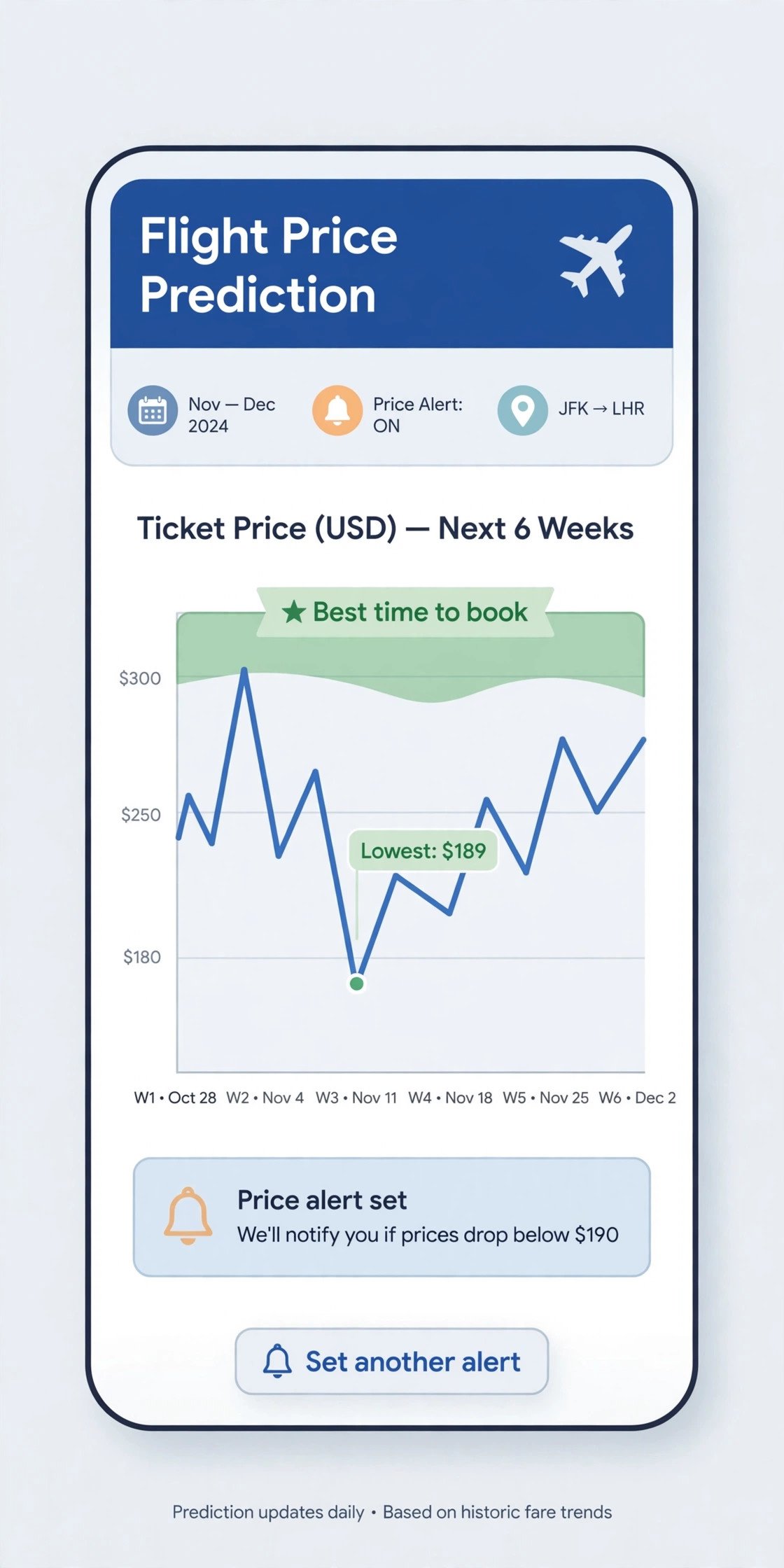
- Google Flights is the best free research tool: price history, fare tracking, and the Explore map, with booking handed off to airlines.
- Hopper has the strongest “book now or wait” predictions, and Skyscanner wins for flexible dates and budget airlines.
- Kiwi.com finds clever self-transfer routes you will not see elsewhere, but those routes carry real missed-connection risk.
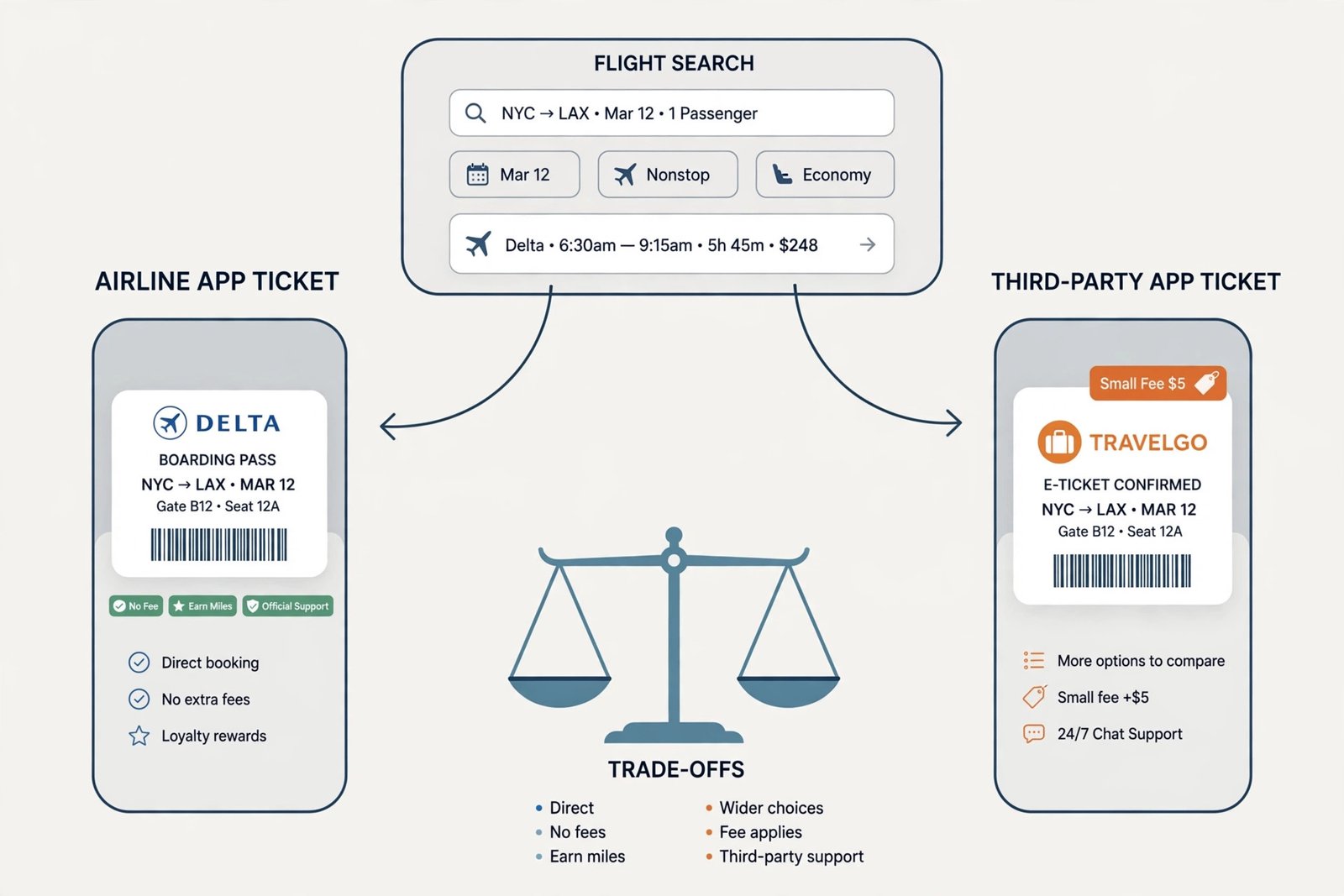
- Whichever app finds your fare, book directly with the airline whenever possible; third-party bookings add fees and slow down refunds when things go wrong.
1. Google Flights: Best Free Research Desk
Google Flights is not where you book; it is where you learn. The Track Prices feature alerts you the moment a fare drops, the Explore map shows the cheapest destinations from your city for any dates, and the calendar view lays out an entire month of prices in seconds. Results link out to book directly with the airline, which keeps you out of third-party ticket messes.
It is free, fast, and especially strong for multi-city itineraries. The one gap: it misses some ultra-low-cost carriers and most travel-agent-only fares, so use it as your baseline, not your only source.
2. Hopper: Best Price Predictions
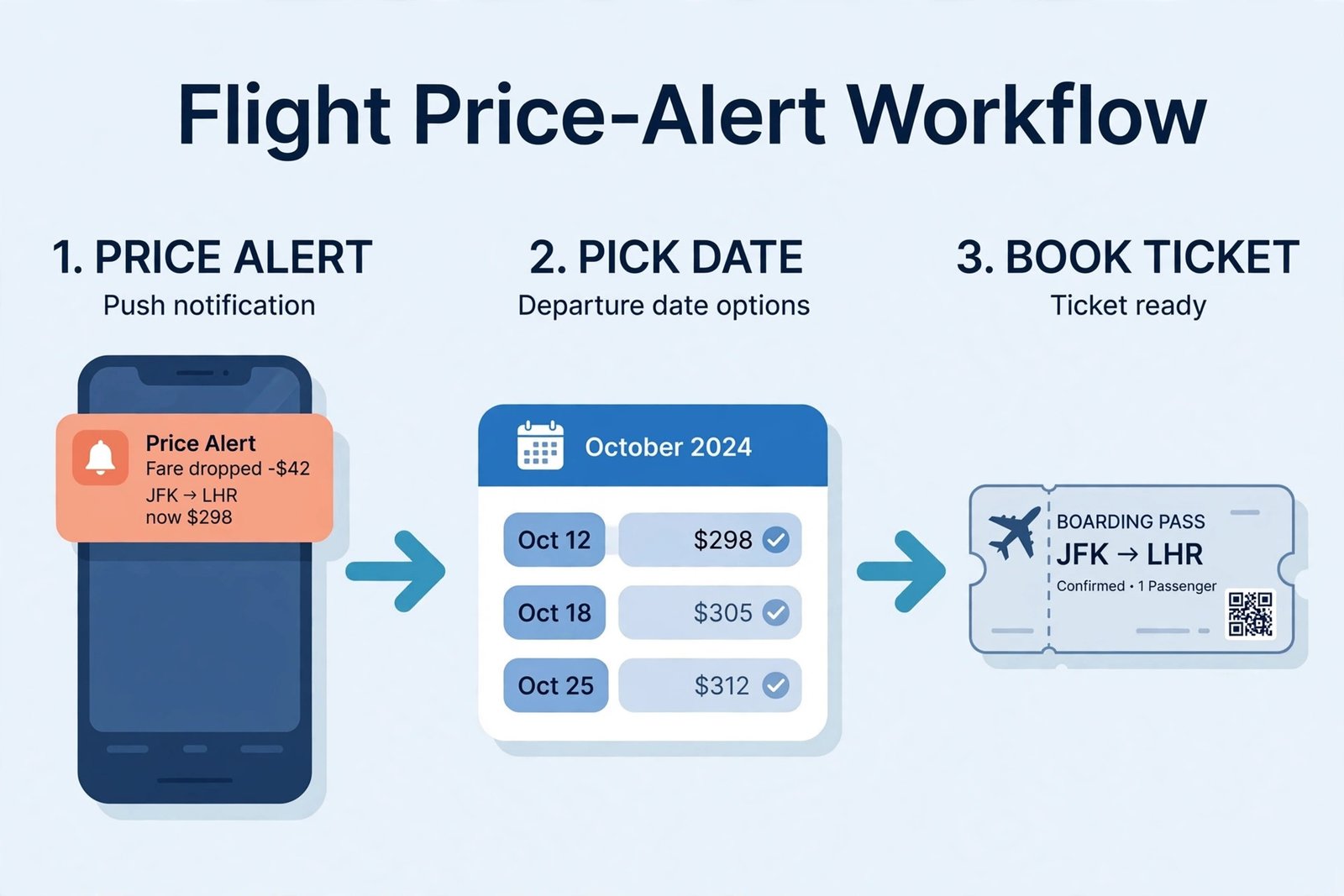
Hopper watches billions of fares and tells you whether to book now or wait, with a claimed accuracy above 95 percent. Its color-coded calendar and push alerts are genuinely useful: you can get notified the instant a route hits its predicted floor. It also lets you freeze a fare while you decide, something almost no one else offers.
The honest weakness: predictions are probabilistic, not promises. A fuel-price spike or a sudden schedule cut can break the forecast, and booking through Hopper puts a middleman between you and the airline. Use Hopper for the forecast, then buy the ticket from the airline directly.
3. Skyscanner: Best for Flexible Travelers
Skyscanner scans hundreds of airlines and agencies at once, and its “Everywhere” search remains unmatched for the traveler who has dates but no destination: type your home airport, pick a month, and browse the cheapest places on the map. Its flexible-date search surfaces fares traditional engines miss.
Most of its results redirect to the airline or agency to complete the booking, so treat Skyscanner as the discovery layer. It is strongest on budget airlines and international routes, weaker on US domestic loyalty integrations.
4. KAYAK: Best for Complex Itineraries
KAYAK’s strength is depth of filtering and its Hacker Fares: two separate one-way tickets stitched into one itinerary, often cheaper than a single round-trip booking. Price alerts, historical fare data, and a solid Explore map make it a research tool on par with Google Flights, with a better interface for unusual routings.
Hacker Fares book through separate tickets, so a missed first leg can strand the second; check the connection times carefully. For standard round trips, its prices usually match the airlines it links to.
5. Momondo: Best Value-Driven Search
Momondo topped Frommer’s 2026 airfare booking rankings for a reason: it consistently surfaces low-cost agency fares other engines skip, in a colorful interface with a strong visual price calendar. Its newer AI-assisted search promises smarter, faster results for deep discounts.
The catch is that the cheapest results often come from obscure agencies, so check reviews of the seller before paying. Use Momondo to find the price floor, then decide whether the seller is worth the risk.
6. Expedia: Best for Bundles
Expedia earns its place only when you bundle flight plus hotel. Its rewards program and package discounts can undercut separate bookings by a meaningful margin, and its global reach covers hotels in places where booking direct is a hassle.
For flights alone it is rarely the cheapest, and bundled bookings complicate changes: one itinerary change can require reworking the whole package. If the trip is flight plus hotel, price the bundle; if it is flight only, start higher on this list. We go deeper on the trade-offs in our guide to the best apps to book flight tickets, which covers when an app beats booking direct.
7. Kiwi.com: Best for Routes Nobody Else Shows
Kiwi.com’s “virtual interlining” combines flights from airlines that do not partner with each other into a single, cheaper itinerary. It shows you options you literally did not know existed, which makes it a favorite for long-haul budget travel.
The risk is real: these are self-transfer tickets, meaning if your first flight is delayed and you miss the second, the second airline owes you nothing. Kiwi sells optional missed-connection protection, which is worth considering on tight connections. Only book here when the savings justify the risk and you understand what a self-transfer means.
8. Priceline: Best for Last-Minute Deals
Priceline’s Express Deals can still produce genuine last-minute bargains on routes with unsold seats, hiding the airline and exact times until after you pay in exchange for a lower fare. For flexible travelers booking within days of departure, it is worth a check alongside Hopper and Skyscanner.
Express Deals are opaque by design: no refunds, no changes, no airline choice. It is a tool for the truly flexible, not for the trip that must go right.
9. CheapOair: Best for Promotions and Flexible Policies
CheapOair runs frequent promotions and is popular with families, students, and group travelers who need flexible cancellation options. Its search covers the usual global inventory plus some discounted consolidator fares.
It adds a per-ticket service fee, disclosed before you pay, which can erase the headline savings on short domestic hops. Always compare the all-in total against the airline’s own site before committing.
10. Trip.com: Best for Asia Routes
Trip.com is the booking app of choice for much of Asia: exclusive regional airline inventory, competitive flash sales, loyalty perks, and multilingual support that actually works. If your trip touches China, Southeast Asia, or Japan, search here before anywhere else.
Outside Asia its edge fades and customer support can be slower for Western time zones. Traveling abroad? Activate an eSIM on your iPhone before you fly so the app’s price alerts and boarding passes work the moment you land.
11. Southwest Airlines: The App You Need for Southwest Fares
Southwest is the odd one on this list: it does not list its fares on any third-party search engine, so none of the apps above can comparison-shop it. The airline’s own app is the only way to see and book its prices, manage check-in, and handle its famously flexible change policy.
Always check Southwest separately when flying US domestic routes; skipping this step is the most common way travelers overpay without knowing it.
12. Cleartrip: Best for India Domestic Travel
Cleartrip is popular in India for its clean interface, fast domestic bookings, integrated train options, and frequent discounts for mobile app users. If your travel includes Indian domestic legs, it is a stronger pick than the global engines for local carriers and schedules.
Its international coverage is thinner than Skyscanner or KAYAK, so treat it as a regional specialist: unbeatable for India, supplementary for everything else.
How to Use These Apps Without Overpaying
The winning routine is simple: research on Google Flights or Skyscanner, set alerts on KAYAK or Hopper, check Momondo for the price floor, and then book on the airline’s own site or app. Never book a third-party fare you have not compared all-in against the airline direct, and never book a self-transfer itinerary without understanding the missed-connection risk. Set your alarm for that early departure once the booking is done, and the apps have done their job.

- How to Run Android Apps on Windows 11 Without WSA in 2026 - October 17, 2026
- iPhone Duo: Should You Buy Apple’s First Foldable? - October 16, 2026
- Best Handheld Gaming PCs in 2026: Steam Deck, ROG Ally, and Legion Go - October 16, 2026