
Copy never stays in one tab. A draft starts in Google Docs, gets pasted into WordPress, and gets trimmed again in a client Slack thread, and every hop is a chance for a typo to sneak in. In this guide, I will walk through the 10 Chrome extensions that have survived in my own copywriting workflow in 2026, ordered by how much time they actually save, with what each one costs and where each one falls short.
Key Takeaways
- Grammarly is the default first install: its free tier catches basic grammar and spelling everywhere you type.
- QuillBot and Wordtune do the job Grammarly does not: rewriting a clumsy sentence into something readable in one click.
- LanguageTool is the pick if you write in more than one language, with checks in 30-plus languages.
- Every extension on this list is actively maintained (verified on the Chrome Web Store in 2026), so you are not installing an abandoned tool that will break on the next browser update.
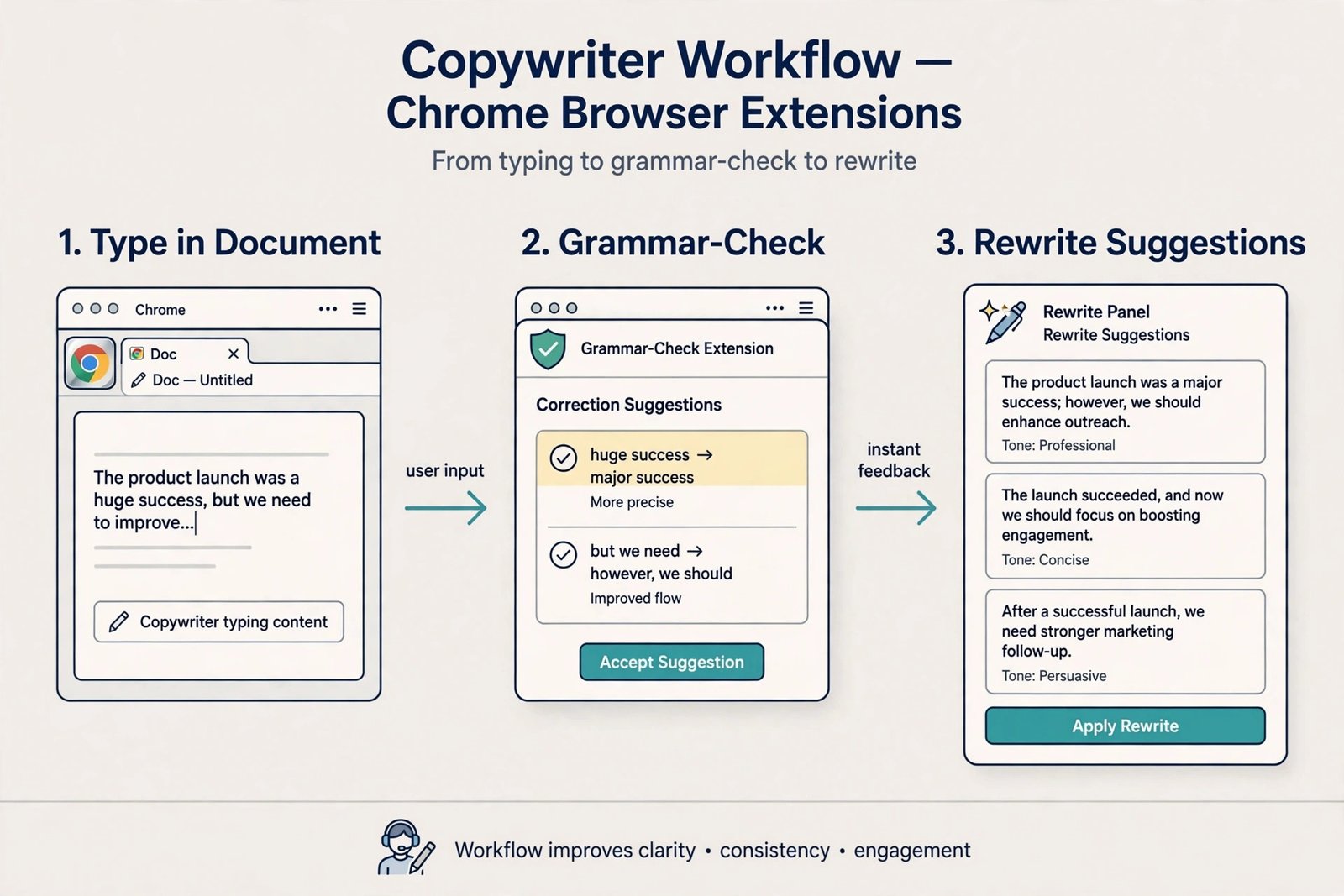
1. Grammarly: Best All-Around Writing Safety Net
Grammarly is still the one extension I recommend before everything else. It checks spelling, grammar, punctuation, and tone as you type in Gmail, Google Docs, LinkedIn, WordPress, and almost any other text box, so you stop pasting drafts into a separate tool to proofread them.
The free tier is genuinely usable: unlimited basic grammar and spelling checks plus tone detection. In 2026 Grammarly folded its old Premium and Business plans into a single tier called Pro: $12 per month billed annually ($144 per year), or $30 month to month. Pro adds full-sentence rewrites, a plagiarism checker, and a much larger AI prompt allowance. The store listing says the extension handles personal data, messages, and website content, so consider pausing it on pages with sensitive details.
2. QuillBot: Best for Rewriting Without Rewriting Yourself
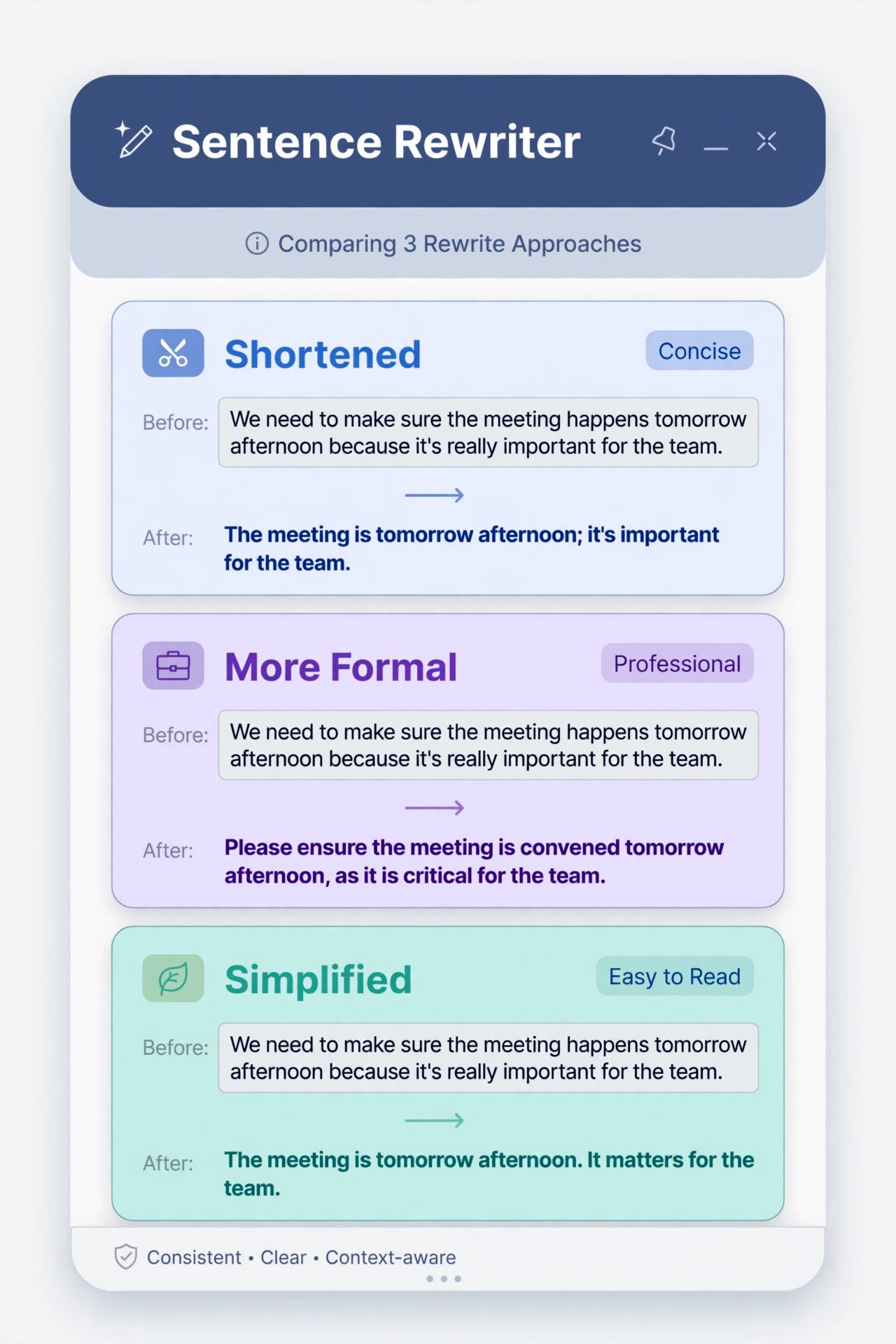
Grammarly polishes sentences; QuillBot rewrites them. Highlight a paragraph and QuillBot returns the same idea in Standard, Fluency, Creative, and other modes, which is a lifesaver when a client says “make it punchier” and you have already stared at the sentence for twenty minutes. The same popup also runs a grammar check, condenses long text, and builds citations.
Free covers 125-word rewrites in two modes with a daily cap. QuillBot Premium is $8.33 per month billed annually ($99.95 per year), or $19.95 month to month, and unlocks all modes plus plagiarism checks. If paraphrasing is most of your job, that annual price is hard to beat.
3. Wordtune: Best for One-Click Sentence Alternatives
Wordtune works at a smaller scale than QuillBot: one sentence at a time, right where you are writing in Docs, Gmail, or LinkedIn. Select a clumsy sentence and it offers a menu of natural rewrites, letting you shift the result casual or formal, shorter or longer. Non-native English writers gain the most here, since it effectively translates “what I meant” into “what sounds right.”
The free plan allows 10 rewrites a day. Paid plans start around $6.99 per month for Advanced and about $9.99 per month billed annually for Unlimited. One honest caveat: Wordtune’s billing practices draw steady complaints, so start monthly and upgrade only if it earns a daily slot in your work.
4. LanguageTool: Best for Multilingual Copywriters
If any part of your work happens in German, Spanish, French, or another language, LanguageTool deserves the slot that Grammarly’s English-only engine cannot fill. It checks grammar, spelling, and style in more than 30 languages, with custom rules and a personal dictionary that make its suggestions fit your house style instead of a generic one.
The extension was updated on the Chrome Web Store in September 2026 and carries a 4.7 rating across 12,600 reviews, so it is well maintained. The free tier covers the basics; a Premium plan unlocks the deeper style checks after a trial. When I write client emails in two languages in one morning, this is the extension doing the quiet work.
5. ProWritingAid: Best for Deep Style Reports
ProWritingAid is the slow, thorough editor in the group. Instead of just flagging errors, it runs your draft through 25-plus reports on readability, repeated words, sentence variety, and pacing, inside Google Docs, Gmail, and Office. It is overkill for a tweet and exactly right for a 2,000-word article before it goes to an editor.
Premium is $10 per month billed annually ($120 per year); Premium Pro is $12 per month billed annually ($144 per year), and there is a $399 lifetime license that pays for itself in under three years against Grammarly Pro. The free tier lets you analyze 500 words at a time with two report runs a day, which is enough to learn whether you like the workflow.
Writers who do a lot of research alongside drafting should look at our guide to the best Chrome extensions for web developers, which covers tab-management and research tools that pair well with this list.
6. DeepL: Best for Translation and Multilingual Tone
DeepL started as a translation tool and has become a copywriter’s bridge between languages. Highlight any text and it translates it into 30-plus languages without leaving the page, inside Gmail, WhatsApp Web, and social feeds. DeepL Write, its rephrasing side, tidies up your own drafts for tone and clarity.
The free tier is generous for occasional work; paid plans add unlimited document translation for heavier use. Pair it with LanguageTool and you can draft in your native language, polish the English, and check the translation reads naturally, all without leaving the browser.
7. MaxAI: Best AI Sidebar for Research-While-Writing
MaxAI docks an AI sidebar onto any page so you can summarize articles, rewrite drafts, and handle bilingual translation without switching tabs. It switches between GPT-4, Claude, Gemini, Grok, and DeepSeek in one place, which is useful when one model gives you flat copy and another nails the tone.
The free tier allows 40 requests a day, enough for a working day of drafting and research; the paid jump is steep, so treat the free tier as the audition. If you write marketing copy informed by research, our breakdown of AI marketing tools shows how these assistants fit a bigger workflow.
8. Sider: Best for Multi-Model Rewrites in One Panel
Sider is MaxAI’s closest cousin: a sidebar on every page for summarizing articles, rewriting drafts, translating PDFs, and editing images without leaving the tab. Its standout feature is group chat, which puts five models on one prompt at once so you can compare five takes on your headline in seconds.
The free quota runs out fast if you lean on the group-chat feature, and the settings panel is more confusing than it needs to be. Try it against MaxAI for a week; one of the two usually wins a permanent spot in a copywriter’s browser.
9. Ginger: Best Lightweight Alternative to Grammarly
Ginger is the oldest-school name on this list: a grammar and spell checker with a sentence rephraser built in, aimed at writers who want corrections without an AI upsell on every other tooltip. It was updated on the Chrome Web Store in October 2025 and still holds a 3.8 rating with half a million users, so it remains maintained even if it is not the flashiest option.
The free tier handles everyday corrections; the paid plan unlocks the full rephrasing engine and translation tools. It is worth a look if Grammarly’s pricing or data permissions bother you and you want something simpler.
10. New Tab Draft: Best Distraction-Free Note Space
This one is not an editing tool at all, which is exactly why it made the list. New Tab Draft turns every new tab into a blank writing page with multiple notes, emoji labels, and automatic backup, all stored locally. It is where headlines get drafted between tabs, where a tricky paragraph gets a second pass before it goes back into the CMS.
It is free with no account required, though nothing syncs between devices and there is no bold, italic, or bullet formatting. Think of it as a scratchpad with zero friction, not a document editor. If the draft you are polishing is your resume, our guide to the top AI-based resume makers in 2026 pairs nicely with everything above.
Building Your Writing Stack
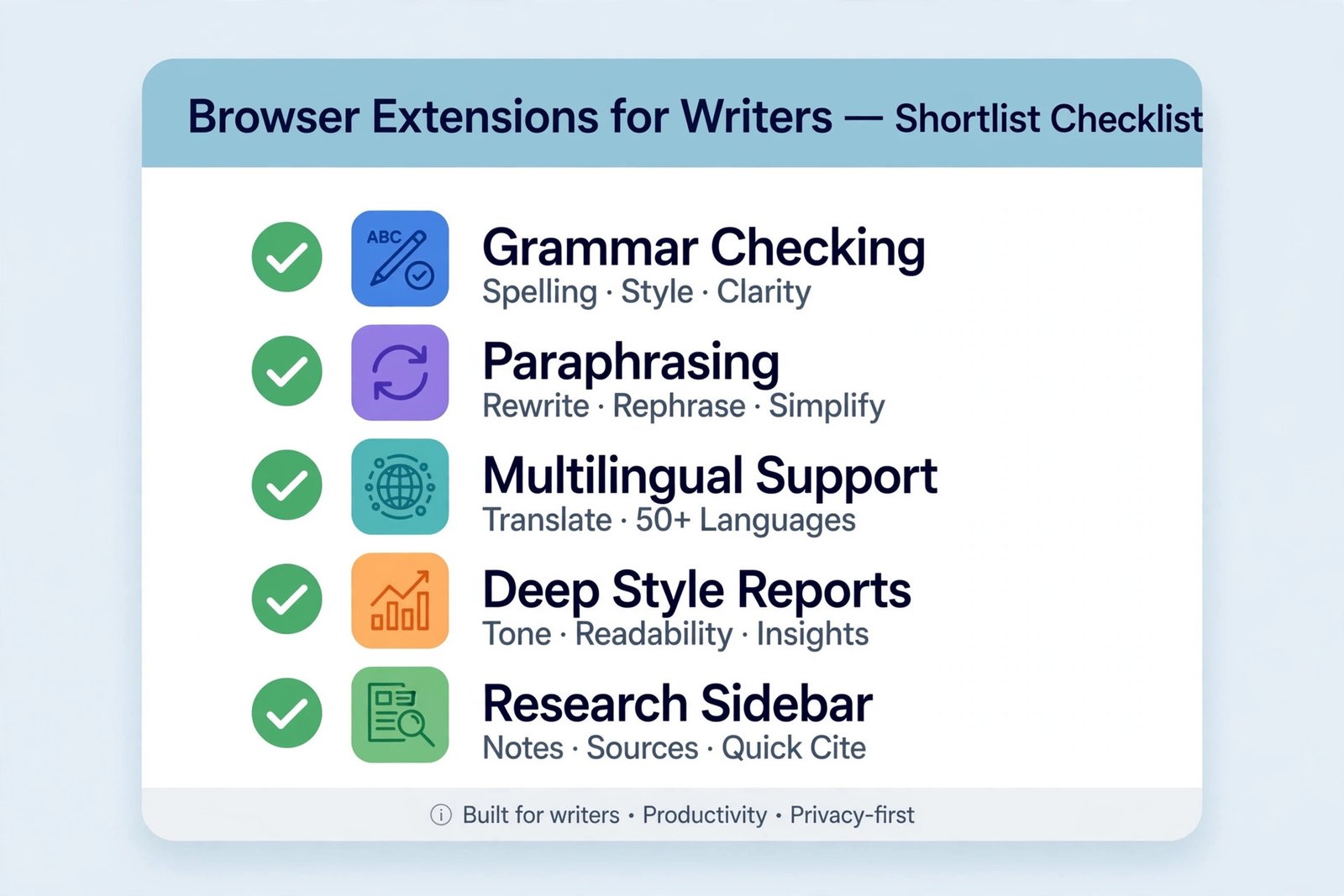
If I were setting up a fresh Chrome profile today, I would install three: Grammarly for the safety net, QuillBot or Wordtune for the rewriting (not both), and LanguageTool or DeepL for multilingual work. Add ProWritingAid only when your drafts regularly cross 1,500 words, and add a sidebar like MaxAI only when research eats your afternoons. Ten extensions installed at once will slow Chrome down and, honestly, slow you down too; the stack that wins is the smallest one that covers your actual work.

- How to Change the Screenshot Save Location on Mac - October 24, 2026
- How to Turn Off Stage Manager on Mac - October 23, 2026
- How to Reset Your Private Space PIN on Android If You Forgot It - October 22, 2026