
Your first trading app shapes your habits more than your first stock pick does. A clear, low-cost app nudges you toward a steady plan; a flashy one with confusing fees nudges you toward impulsive trades. This guide answers the questions beginners actually ask in 2026, with current fee structures and honest risk warnings. It is education, not financial advice: your money decisions are yours, ideally made with a qualified advisor.
Which trading app should a total beginner start with?
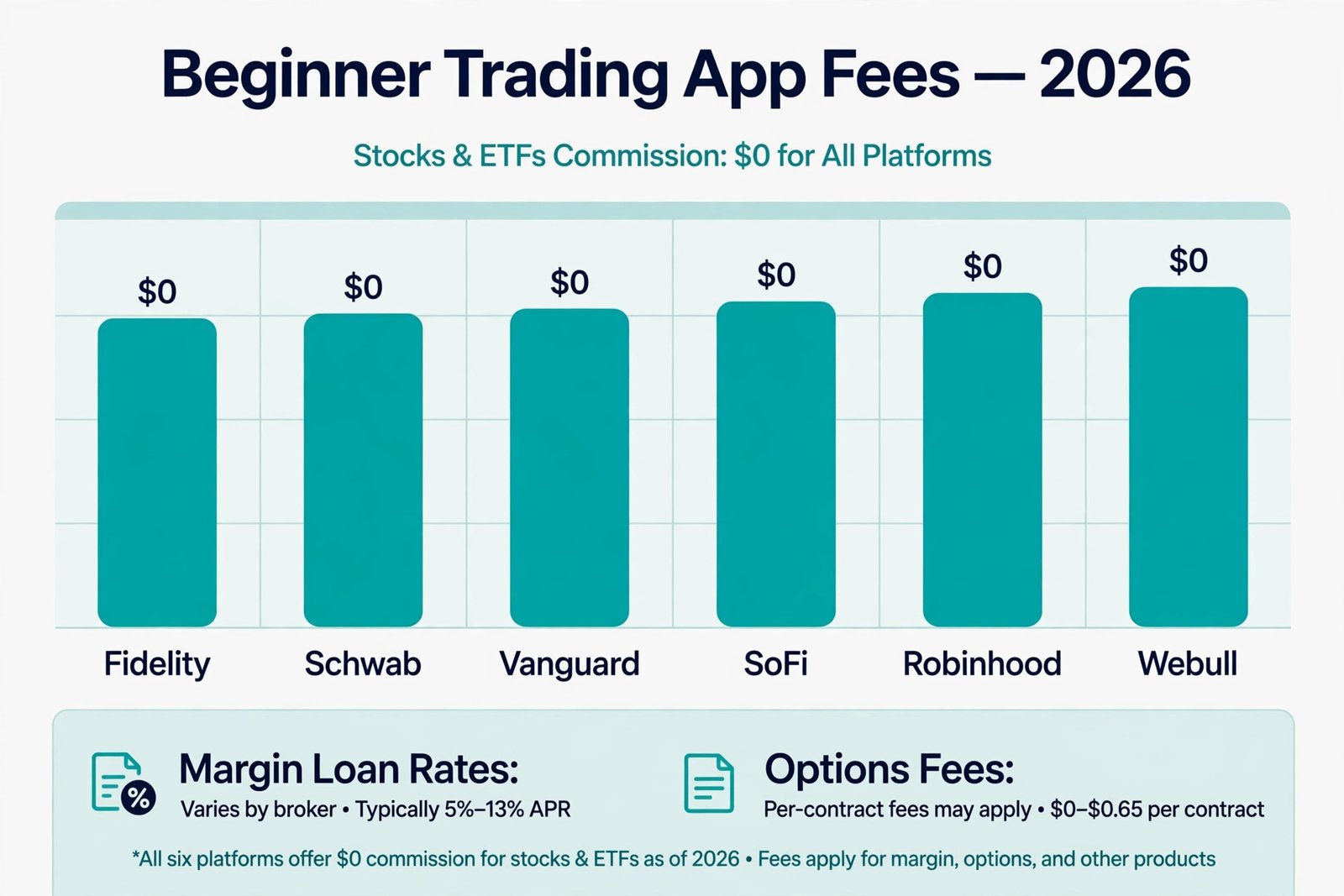
For most beginners in 2026, Fidelity is the strongest all-round starting point: $0 commissions on US stocks and ETFs, fractional shares from $1, strong customer support, and built-in retirement accounts like IRAs. Charles Schwab is a close alternative with the same $0 commission structure and a reputation for hand-holding new investors.
If you want the simplest possible experience, SoFi Invest offers $0 commissions with a clean app and automated investing options for people who would rather not pick stocks at all. Robinhood remains the most mobile-first option with $0 commissions and no options contract fee, and Webull suits beginners who want free paper trading, a practice mode that lets you trade with fake money before risking real dollars.
Are commission-free trading apps really free?
Mostly, but not entirely. When an app charges $0 commission on stocks and ETFs, it still has to make money, and it does so through routes you should understand: the spread between buy and sell prices, fees on options contracts or margin borrowing, charges for extras like wire transfers, and in some cases payment for order flow, where market makers pay the broker to execute your trades.
None of this makes commission-free apps a scam, but it means “free” deserves a closer look. Before you commit, check the app’s published fee schedule for three things: margin interest rates, options fees, and account transfer or inactivity fees. The cheapest app for a buy-and-hold beginner is often not the cheapest for an active trader.
How much money do I need to start?
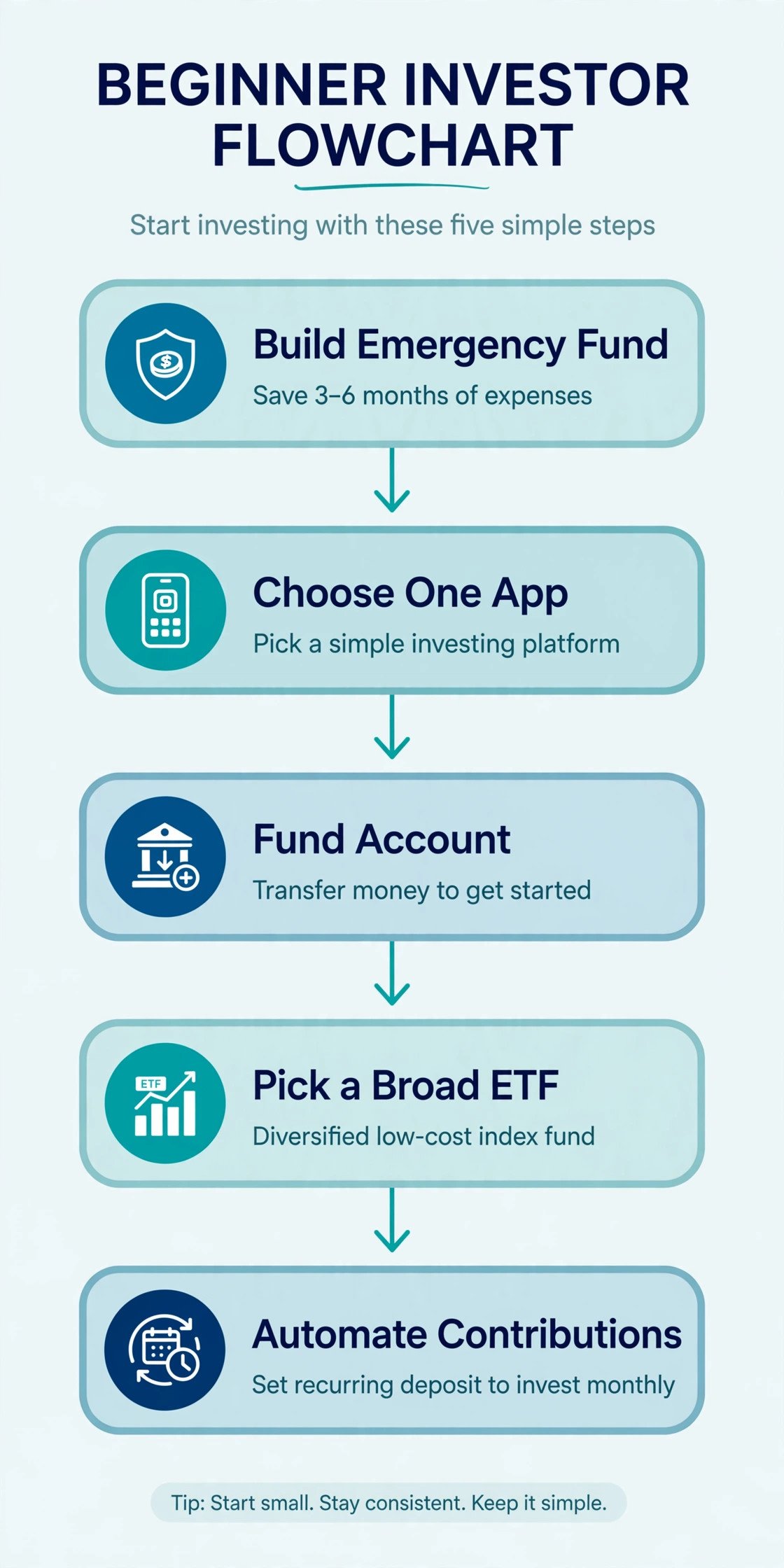
Far less than most people assume. Fractional shares, now standard at Fidelity, Schwab, SoFi, and Robinhood, let you buy a slice of an expensive stock with as little as $1. There is no account minimum that matters for getting started at the major apps in 2026.
The more useful question is how much you can afford to leave invested for years without touching it. A common beginner mistake is investing the emergency fund; keep three to six months of expenses in savings first, then invest money you will not need soon.
Should I buy individual stocks or ETFs?
For most beginners, broad-market ETFs are the saner starting point. One ETF can hold hundreds of companies, so a single bad earnings report barely dents you. An individual stock concentrates all your risk in one company, which is exciting when it works and painful when it does not.
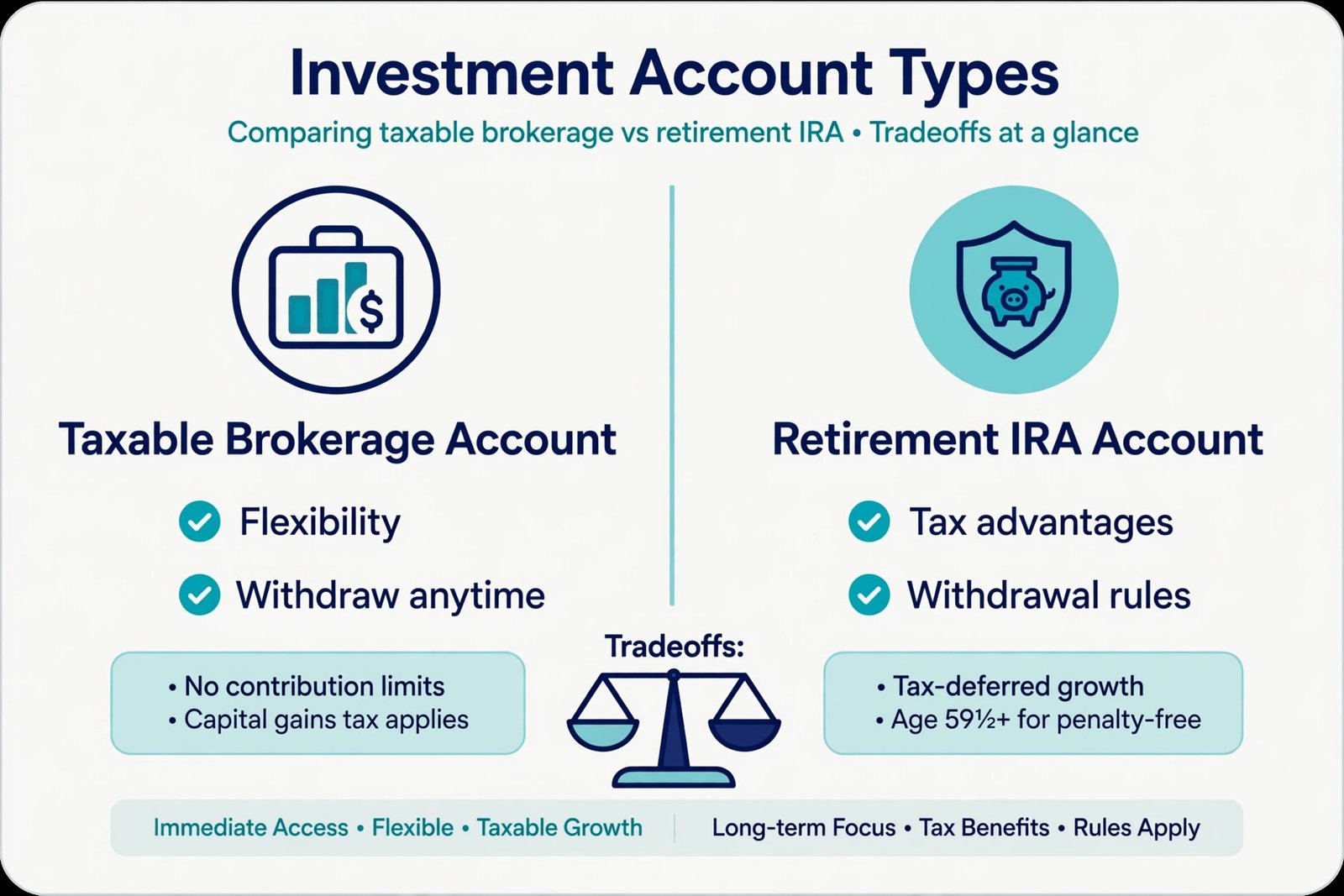
That said, owning a small number of individual stocks you understand can teach you how markets work. A reasonable beginner split is most of your money in diversified ETFs, with a small portion set aside for individual companies you have actually researched. If you are choosing between broader investing platforms rather than pure trading apps, our investment app guide covers that angle too, and crypto-curious readers should see our cryptocurrency apps for beginners breakdown first.
What is paper trading, and do I need it?
Paper trading is a simulator: you place trades with virtual money and watch what would have happened, with zero risk. Webull offers one of the best free paper trading modes among beginner apps, and it is genuinely useful for learning how order types work, like the difference between a market order and a limit order, before real money is on the line.
You do not need it if your plan is simply to buy ETFs and hold them for years; a simulator teaches you trading mechanics, not patience. But if you are curious about active trading, a month of paper trading will teach you more about your own impulses than any article can.
Is my money safe in a trading app?
Reputable US brokers are members of SIPC, which protects the securities and cash in your account up to $500,000 if the brokerage itself fails. That is protection against broker failure, not against the market: if your stocks fall 30 percent, SIPC does nothing for you.
Stick to established, regulated brokers, enable two-factor authentication, and never share your login codes. A broker going bust is rare; an account getting compromised through weak security is the more realistic risk, and it is the one you control.
What are the biggest risks nobody warns beginners about?
Three, and they all look harmless at first. Margin borrowing lets you trade with the broker’s money, which multiplies losses as fast as gains and can leave you owing more than you deposited. Options and leveraged products can go to zero quickly, and they expire, which stocks do not. Day trading has a brutal track record for beginners: most people who try to outsmart the market daily end up poorer than if they had done nothing.
The quiet, boring strategy, regular contributions to diversified funds, held for years, keeps beating the exciting one. If an app feature feels like a game, pause and ask who benefits from you tapping it repeatedly.
Our Take
Start with Fidelity or Schwab for the best blend of $0 commissions, education, and support. Add Webull’s paper trading if you want to learn mechanics risk-free. Keep most of your money in diversified ETFs, automate contributions, ignore the noise, and treat anything involving margin or leverage as a red flag until you truly understand it. This is not financial advice; it is a starting framework, and a qualified advisor can tailor it to your situation.

- How to Change the Lock Screen Timeout on Windows 11 - October 25, 2026
- How to Fix the Windows 11 Taskbar Auto-Hide Problem - October 24, 2026
- How to Fix a Laptop Camera Not Working in Windows 11 - October 23, 2026