
You wake up tired, open a sleep app, and get a score that tells you nothing about what to change. That is the real problem with sleep trackers: most of them measure your nights beautifully and coach your days badly. This guide skips the generic rankings and matches the tracker to your situation, because the right pick depends entirely on what you will actually wear, pay for, and act on.
What sleep trackers actually measure
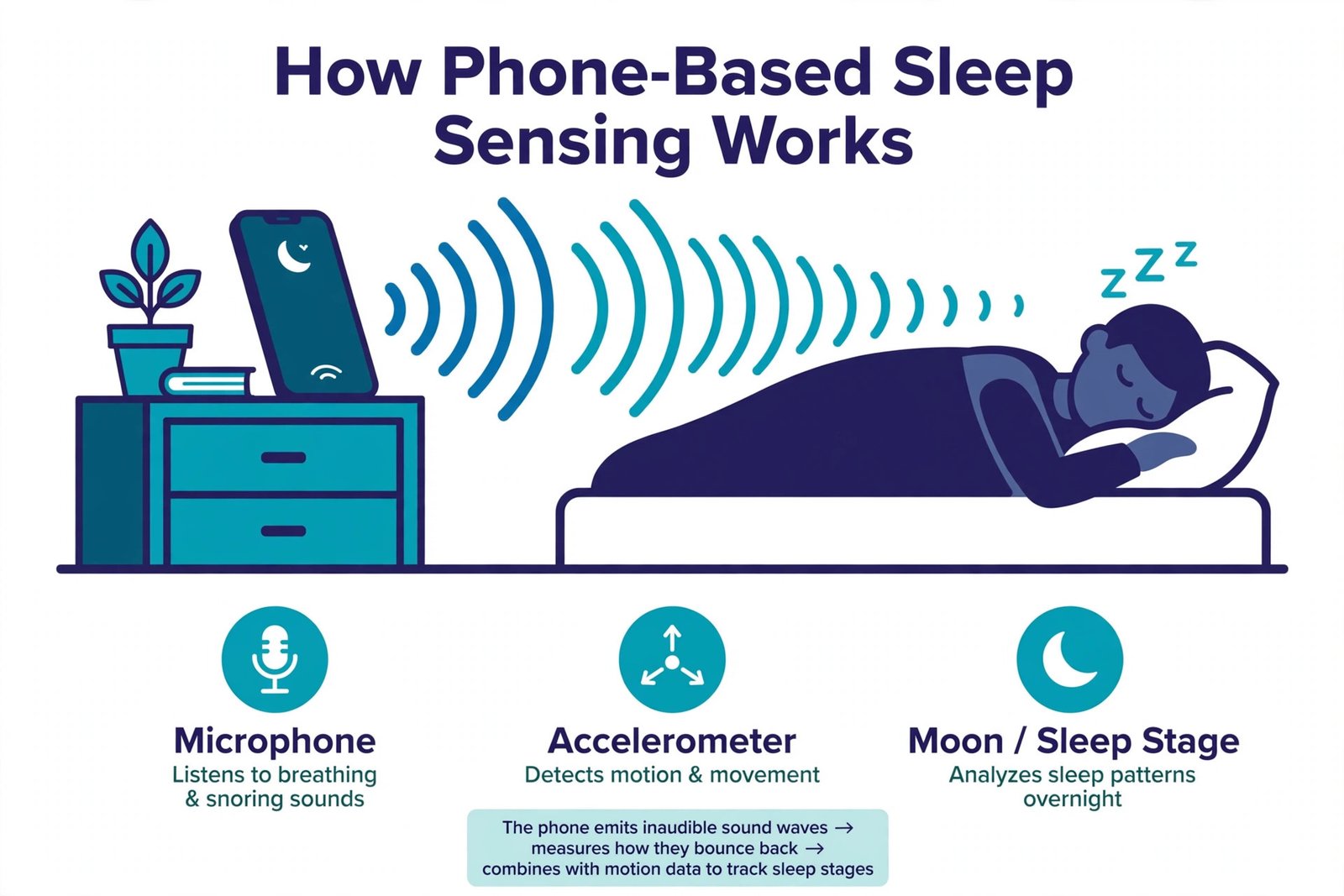
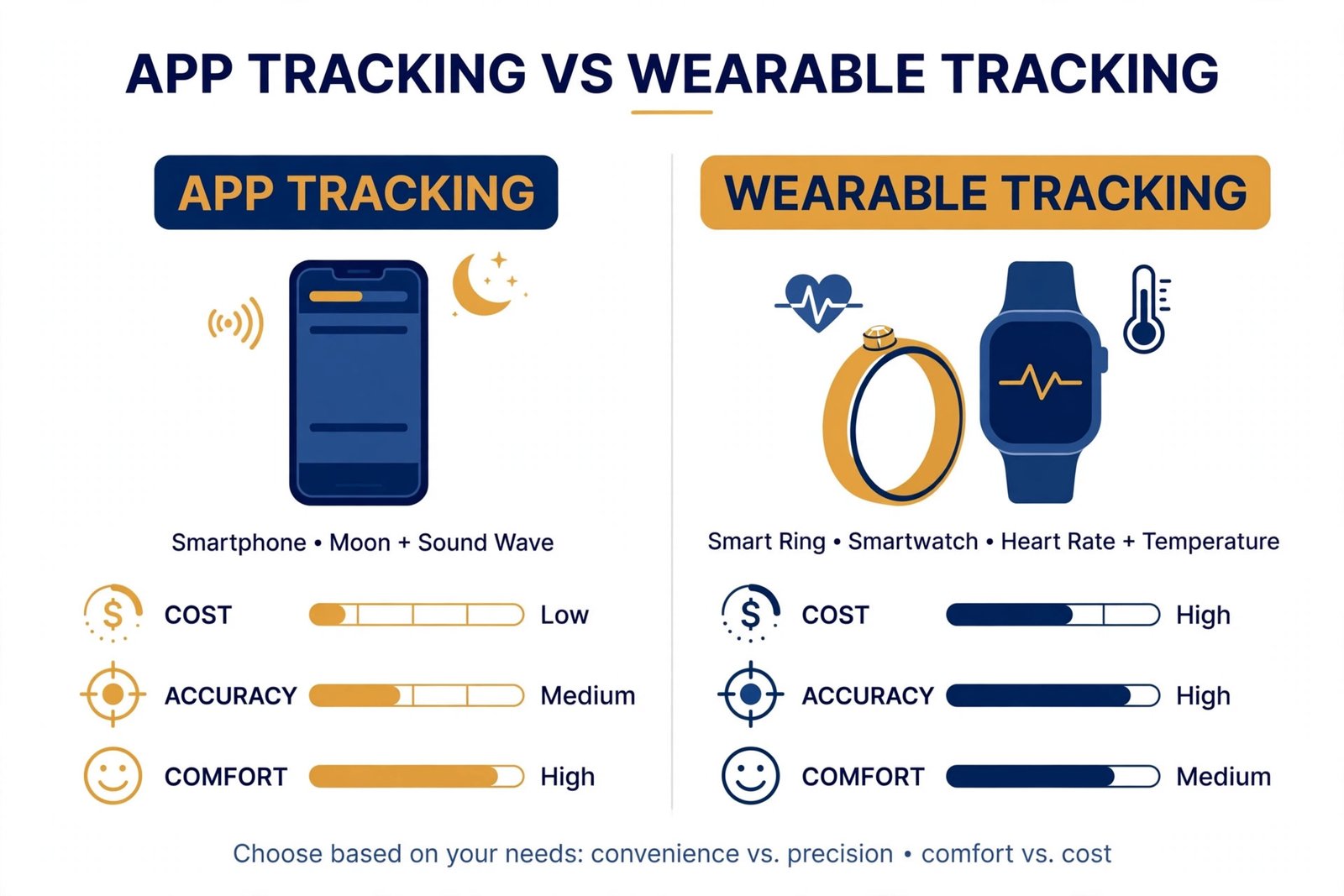
Phone apps estimate sleep from sound and movement, sometimes surprisingly well. Wearables add heart rate, heart rate variability, skin temperature, and blood oxygen, which makes their sleep-stage estimates more accurate. No consumer tracker matches a clinical sleep study, so treat scores as trends over weeks, not verdicts on a single night.
Pick your scenario
If you want zero hardware: Sleep Cycle
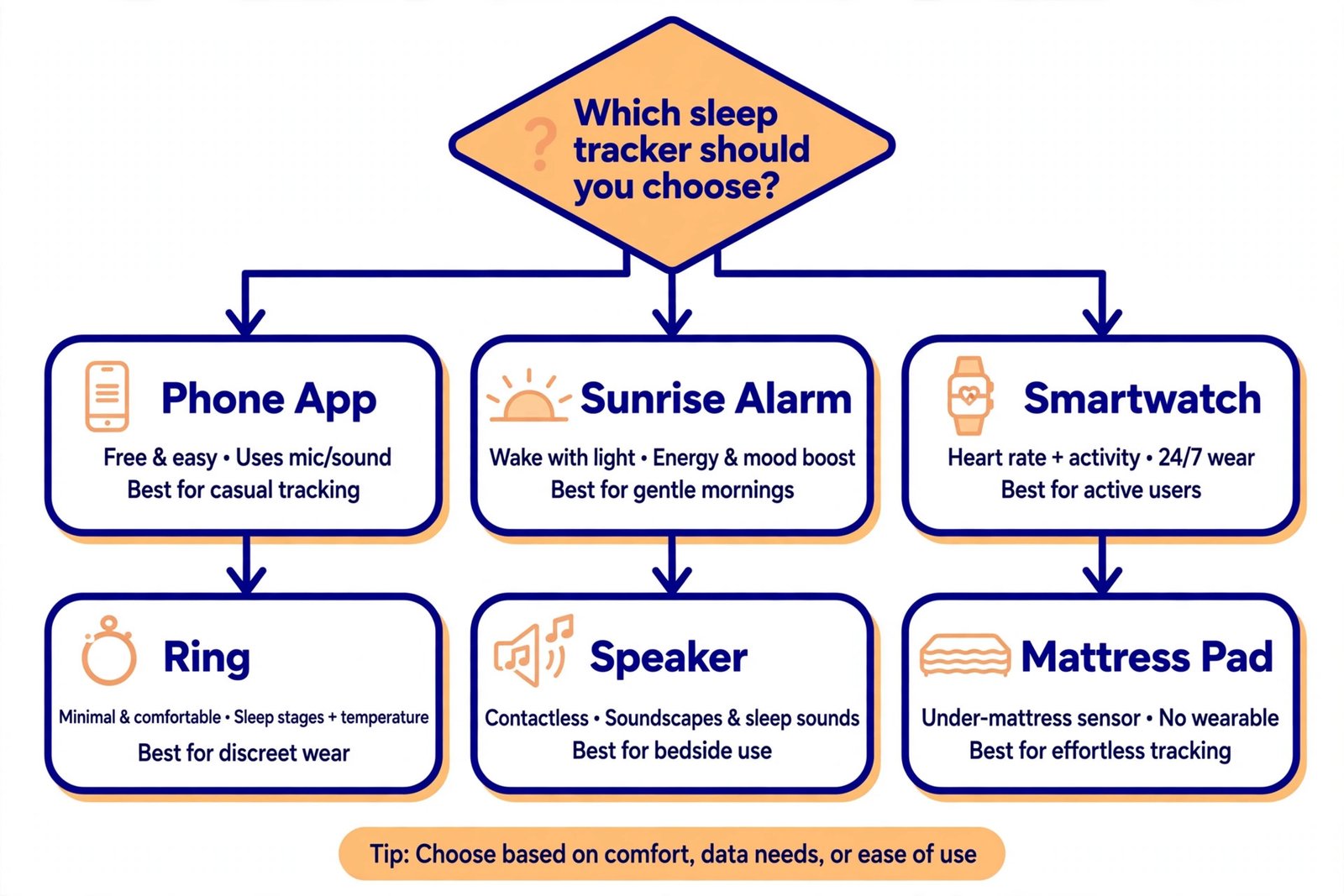
Sleep Cycle turns your phone into a sleep tracker. Put it by your bed and it uses sound analysis to track sleep quality, record snoring, and wake you with a smart alarm inside a 30-minute window when you are in light sleep. It syncs with Apple Health and needs no wearable at all.
- Strengths: no extra device to buy or charge, smart alarm that eases you awake, snore and sound recording.
- Caveats: premium costs about $39.99 per year; phone-only tracking is less precise than a wearable.
Our take: the easiest possible start. If you will not wear anything to bed, this is your tracker.
If you want coaching on your schedule, not just charts: RISE
RISE is different from most trackers: instead of drowning you in graphs, it estimates your sleep debt and predicts your daily energy peaks and dips from your circadian rhythm. It then suggests when to get light, cut caffeine, and wind down. It works from phone usage patterns and can pull in health app data.
- Strengths: actionable daily guidance, energy scheduling, habit reminders for caffeine, light, and exercise.
- Caveats: about $69.99 per year with no permanent free plan; it estimates sleep rather than sensing it directly.
Our take: the pick for people whose real problem is daytime energy, not curiosity about sleep stages.
If you already own an Apple Watch: Pillow or SleepWatch
An Apple Watch is already a capable sleep sensor, so the question is which app reads it best. Pillow offers detailed sleep analysis with premium features, while SleepWatch keeps it simple with a daily sleep score. Both are far cheaper than buying new hardware.
- Strengths: uses hardware you already charge nightly, deep Apple Health integration.
- Caveats: watch battery takes a hit overnight; premium features cost extra (SleepWatch from about $4.99 per month).
Our take: do not buy a ring or band if a watch app answers your question. Try one of these first.
If you want the most accurate sleep data: Oura Ring or Samsung Galaxy Ring
Smart rings are the most comfortable way to get serious sleep data: no screen, no bulk, worn on a finger overnight. The Oura Ring 4 is the most tested option, with extensive sleep metrics, a 5 to 8 day battery, and an AI advisor that explains your data in plain language. It starts at $349 with a $5.99 per month subscription. The Samsung Galaxy Ring offers similar ring-based tracking with no subscription at all and up to 7 days of battery, which makes it the cheaper long-term pick if you use a Samsung phone.
- Strengths: most accurate consumer sleep tracking, comfortable overnight wear, multi-day battery.
- Caveats: expensive hardware, and Oura’s subscription adds up; rings can feel chunky for small fingers.
Our take: for data nerds who will actually read the metrics. Everyone else is overspending here.
If you want help falling asleep, not tracking: ShutEye
ShutEye focuses on the other end of the night: sleep sounds, relaxation content, and wind-down routines that help you fall asleep faster. It does track sleep, but its strength is the bedtime experience rather than the morning report.
- Strengths: large library of sleep sounds and stories, good wind-down routines.
- Caveats: about $59.99 per year; the tracking itself is basic compared with dedicated trackers.
Our take: buy this for falling asleep, not for analyzing sleep. Different job, different tool.
If you refuse to wear anything or pay monthly: Withings Sleep Analyzer
The Withings Sleep Analyzer is a mat that slides under your mattress and tracks sleep stages, heart rate, snoring, and breathing disturbances. It plugs in, so there is no battery to charge, and there is no subscription.
- Strengths: nothing to wear, nothing to charge, no subscription, excellent comfort.
- Caveats: higher upfront cost than an app, and it only tracks one side of the bed well.
Our take: the set-and-forget option. Install it once and never think about tracking again.
App versus wearable at a glance
| Tracker | Type | Hardware cost | Subscription | Best for |
|---|---|---|---|---|
| Sleep Cycle | App | None | ~$39.99/yr | Zero-hardware tracking |
| RISE | App | None | ~$69.99/yr | Energy and schedule coaching |
| Pillow / SleepWatch | App + watch | Watch you own | Varies | Apple Watch owners |
| Oura Ring 4 | Smart ring | From $349 | $5.99/mo | Maximum accuracy |
| Samsung Galaxy Ring | Smart ring | Varies | None | Accuracy without subscription |
| ShutEye | App | None | ~$59.99/yr | Falling asleep |
| Withings Sleep Analyzer | Under-mattress | Varies | None | Wear-nothing tracking |
Our take
Start free and simple: if you own a smartwatch, use Pillow or SleepWatch before buying anything. If you do not, try Sleep Cycle. Upgrade to RISE only if your problem is daytime energy and you will follow its guidance. Buy a ring only if you genuinely read sleep data and act on it. And remember that no tracker fixes the basics: a dark room, a consistent bedtime, and a phone that stops buzzing. Our guides to Do Not Disturb on Android, mental health apps, and yoga apps for beginners cover the habits that move the needle more than any score.
Frequently asked questions
Are phone sleep tracking apps accurate?
Reasonably, for sleep duration and wake times. They are weaker at sleep stages because they only sense sound and movement. Treat their trends as useful and their nightly scores as approximate.
Do I need a subscription for a sleep tracker to be useful?
No. Sleep Cycle’s free tier tracks your nights, and the Withings mat and Samsung Galaxy Ring have no subscription at all. Subscriptions buy coaching, deeper history, and AI explanations, which only matter if you use them.
Can a sleep tracker help with insomnia?
A tracker can reveal patterns, like late caffeine or irregular bedtimes, that feed insomnia. But tracking alone does not treat it. If sleeplessness persists for weeks, talk to a doctor rather than buying more hardware.

- How to Fix a Laptop Camera Not Working in Windows 11 - October 23, 2026
- How to Fix the Brightness Slider Missing in Windows 11 - October 22, 2026
- How to Stop Phone Link From Opening on Startup in Windows 11 - October 21, 2026